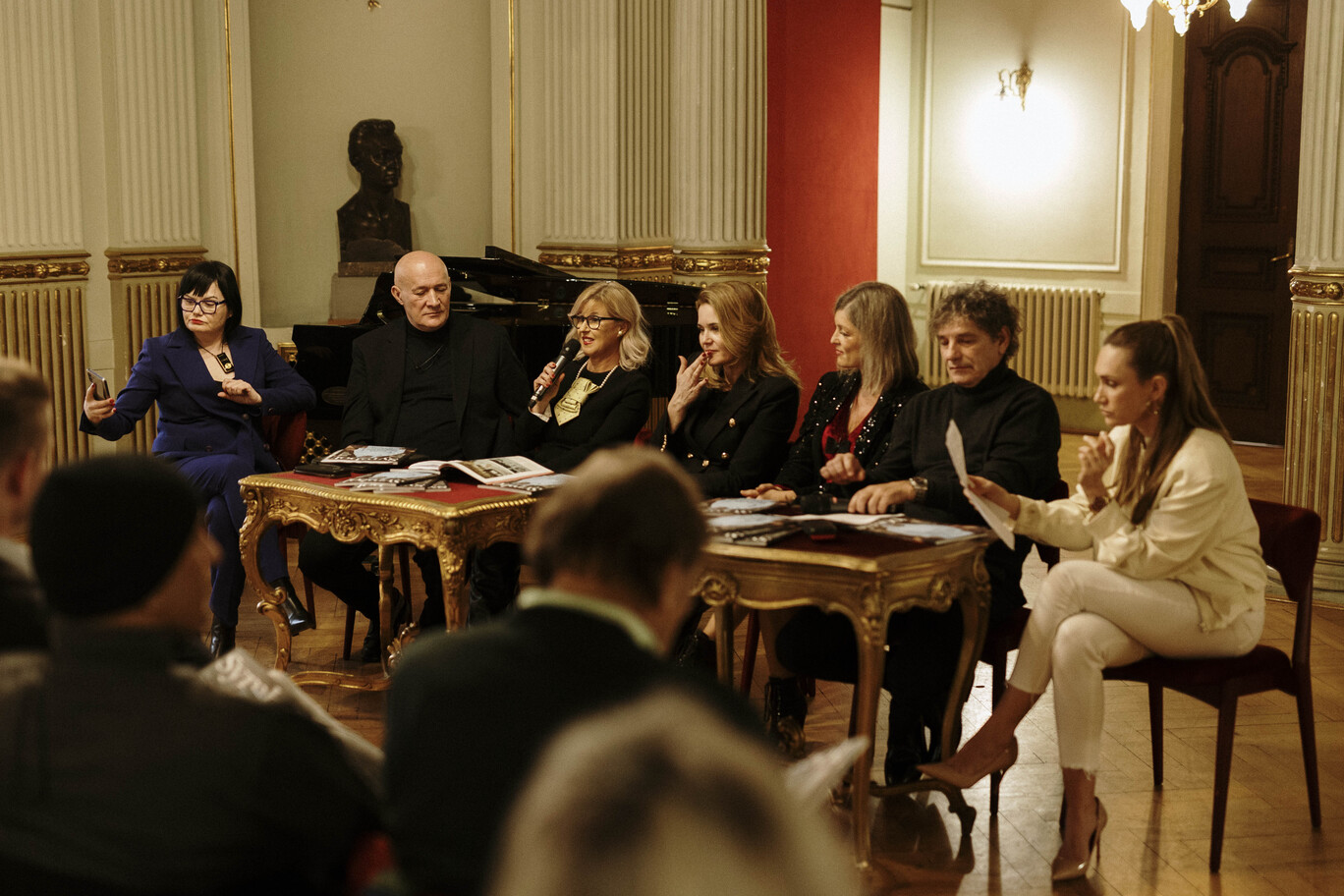
Written by: Sonja Staničić
Photos: Zoran Škrbić
If you have ever been to New York’s Broadway or London’s West End, where there are as many as 40 professional theatres, you could not possibly have missed the massive lines of people flocking to the foyers every evening, eagerly waiting for the performances to begin. Tourists from all over the world, as well as locals, readily shell out for tickets, even if they end up watching the show from the last seat in the auditorium behind a column that blocks the view of half of the stage.
Such sights serve as the most compelling evidence that, despite the occasional fatalistic theories about the uncertain future of the theatre, it still ranks quite high compared to a number of other entertainment providers of today.
However, theatres can pull it off only if they provide the average viewer with an extraordinary experience and a true spectacle, awakening all of their senses and stirring their emotions.
To stage a play with such an effect, first of all, you need a wisely selected title, a carefully composed team of authors and ensemble, sumptuous scenography, and costumes, which will ultimately, after months and months of rehearsals, and if everything goes according to plan, result in a superb product.

The Opera & Theatre Madlenianum, situated in the heart of Zemun, a municipality in Belgrade, sticks to this very recipe. Madlenianum is one of the few private opera houses in this part of Europe, owned and founded by Madlena Zepter, and is considered one of the most luxurious and well-equipped theatres in this region. In the last quarter of a century of its existence, Madlenianum attained the status of a respectable theatre, staging eye-catching shows, winning the audiences’ affections, and becoming an important point on the cultural map of Serbia and Europe.
Their repertoire includes spectacular world-class musicals, comedies, and dramas based on contemporary texts, as well as superb ballets, operettas, and modern takes on classical operas that draw hundreds of spectators every day.
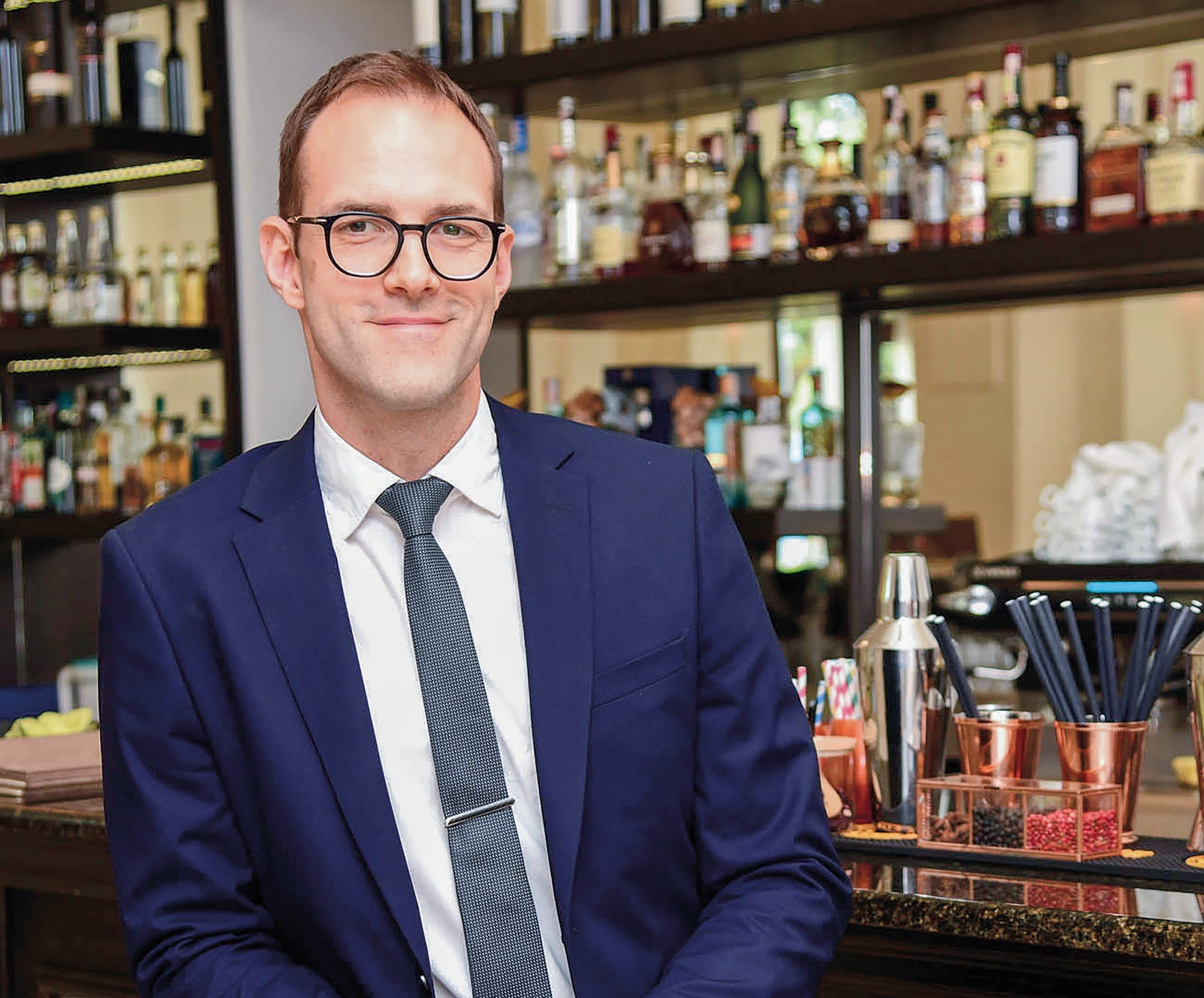
Having in mind that behind every theatrical spectacle is a person with the talent to transform a particular work of art into a stage performance and skilfully manage an ensemble of several hundred performers, we looked for an interlocutor with extensive experience in directing, who could let us in on the details of the actual process of staging such productions. And we found him – director and actor Robert Bošković is a widely known master of grand musical and theatrical spectacles. In recent years, this Dubrovnik native has been a permanent associate of the Opera & Theatre Madlenianum in Zemun, whose repertoire includes as many as four of his crowd-pleasers.
– First of all, I must say that working at Madlenianum is an exceptional honour, which gives me great pleasure. I’m convinced that every director would be over the moon to have the opportunity to create in these conditions and with these stellar people. All the employees, from the theatre managers to technicians, make-up artists, hair stylists, and costume designers, have given me great support, and their professionalism is always up to standard. However, the strongest winds beneath my wings are Mrs Madlena Zepter and the artistic director, Mr Rackov, whom I would like to thank from the bottom of my heart for all the opportunities they’ve given me. I staged four wonderful plays at Madlenianum, each of which was a roaring success – Bošković tells us at the beginning of our interview.

The four plays in question are the operettas La Vie Parisienne by J. Offenbach and The Merry Widow by Franz Lehár, the musical The Last Five Years by Jason Robert Brown, and the concert The Lights of the Stage, which marked the celebration of Madlenianum’s silver jubilee.
– I am proud that my rendition of The Merry Widow has been successfully running for four years straight, and La Vie Parisienne gets sold out in a matter of hours every time.
Unlike most other theatres in the region, Madlenianum does not have its own opera, drama, or ballet ensemble, nor does it employ permanent orchestra members. Therefore, they put out audition calls for each individual production.
– If you ask me, it’s a wonderful practise because auditions open up an opportunity for artists to present themselves and give their best, and for us to pick the ones we like the most. I remember the first audition for The Merry Widow – more than 300 people applied! Apart from me, the committee always includes Andreja Rackov, maestro Vesna Šouc, choreographer Milica Cerović, and Mrs Zepter often shows up for these occasions. Although the process itself is sometimes exhausting and time-consuming, it’s the only proper way to go; it guarantees that we get the best team for the production. And that ultimately results in successful and sold-out shows. At the same time, my rendition of The Merry Widow has a double cast, and La Vie Parisienne counts as many as three! – he says excitedly.

His artistic career took off when he was still a boy living in his native Dubrovnik, when he landed a role in the play Gold, Frankincense, and Myrrh at the age of nine. Since then, and while studying at the Academy of Dramatic Arts in Zagreb, where he graduated in acting and later earned a master’s degree in directing, he has portrayed roles in several dozens of plays, and he is especially proud of his collaboration with the Komedija Theatre in Zagreb, where he played in dramas and musicals. He has also acted in many movies, series, and television shows, and he started directing, as he says, almost entirely by chance.
– I have Krešimir Dolenčić to thank for that. He hired me as assistant director on Mozart’s opera Così fan tutte at the Dubrovnik Summer Festival. After that, offers from other theatres came rolling in, mainly for operas, operettas, and musicals. You see, there are few directors who know how to stage a musical performance, which is a combination of acting, singing, and dancing, and it often includes up to 200 people on stage, a large orchestra, two or three casts…And the director is expected to have a handle on music, excellent organisational skills and finally – the talent needed for the job – he explains.
Although he has also directed small cast plays, he is best known in the world of theatre precisely for his grandiose productions.
– You got that right: directors and producers of theatres often make jokes at my expense at the first meeting, saying things like, “Here’s Bošković; let’s make room for huge props and at least 300 costumes.” However, they are the ones who want a spectacle on stage, which is why they call on me in the first place. I must also give a shout-out to my team of authors, whom I “drag” with me from play to play and who make my job so much easier. My team includes scenic designer Vesna Režić, costume designer Duška Nešić, and choreographer Milica Cerović. All in all, the key to working on such large-scale plays is the preparation, experience, and creativity of the team of authors, a good cast and crew, excellent organisation, and discipline – but all of this would fall flat without talent.

In that regard, he often mentions Krešimir Dolenčić as his main mentor and role model.
– He’s a true artist, a wonderful mentor and an even greater man. I started working with him as an actor, and when I took on directing, he has been nothing but supportive of me. I can call him at any time and ask for advice. I am immensely grateful to him because he is a person with great experience, and whatever play he works on always turns out to be a hit. For example, he taught me about the importance of acting in musical performances, as well as combining good scenography, good costumes and good directing practises into a spectacle without it being overwhelming. People started telling me that I’m a maverick just like him and that we exude the same energy when working, which flatters me and makes me very happy.
When asked if he will ever step onto the stage again, he responds:
– I’m afraid not; I simply don’t have time to act in new plays. For the last six years, I’ve literally been going from project to project, from city to city, from state to state…
He declares himself as a Dubrovnik native with residences scattered across cities like Zagreb, Belgrade, London, Osijek, Zadar, Split, Pula, Ljubljana, Cologne… But where does he feel most at home?
– I have an agent from Germany who secures projects for me all over Europe, but there are certain theatres with which I cultivate intensive and excellent collaboration more so than with others. Madlenianum is undoubtedly one among them. When in Belgrade, I always stay at the Zepter Hotel, where my dog Bono and I feel at home. We are there so often that the front desk has a sign saying, “Mr Bono and Mr Bošković are coming”. And Bono has memorised the route to the hotel by heart: as we get out of the car, he leads the way – he laughs.

Recently, he worked in Belgrade on the revival of the musical The Last Five Years, which is making a comeback to the Madlenianum’s repertoire after two and a half years. This Broadway hit, which was also adapted into a Hollywood film, deals with love, suffering, pursuit of a career, marriage, and parting in a very enticing dramatic and musical form. It’s a show that promises a good time, but also gets people thinking.
– There’s no better feeling in the world than seeing a jam-packed theatre and a satisfied audience sending the ensemble off with a standing ovation and leaving the theatre with a smile on their face. That’s when my heart is at ease.
It is upon us to deduce from the theory laid out at the beginning of this text: as long as there are good plays, there will be audiences. And Madlenianum corroborates this in the finest way imaginable, as a place where true
magic of theatre comes to life.