Written by: Mladen Pleše
Photos: Željko Jovanović
…
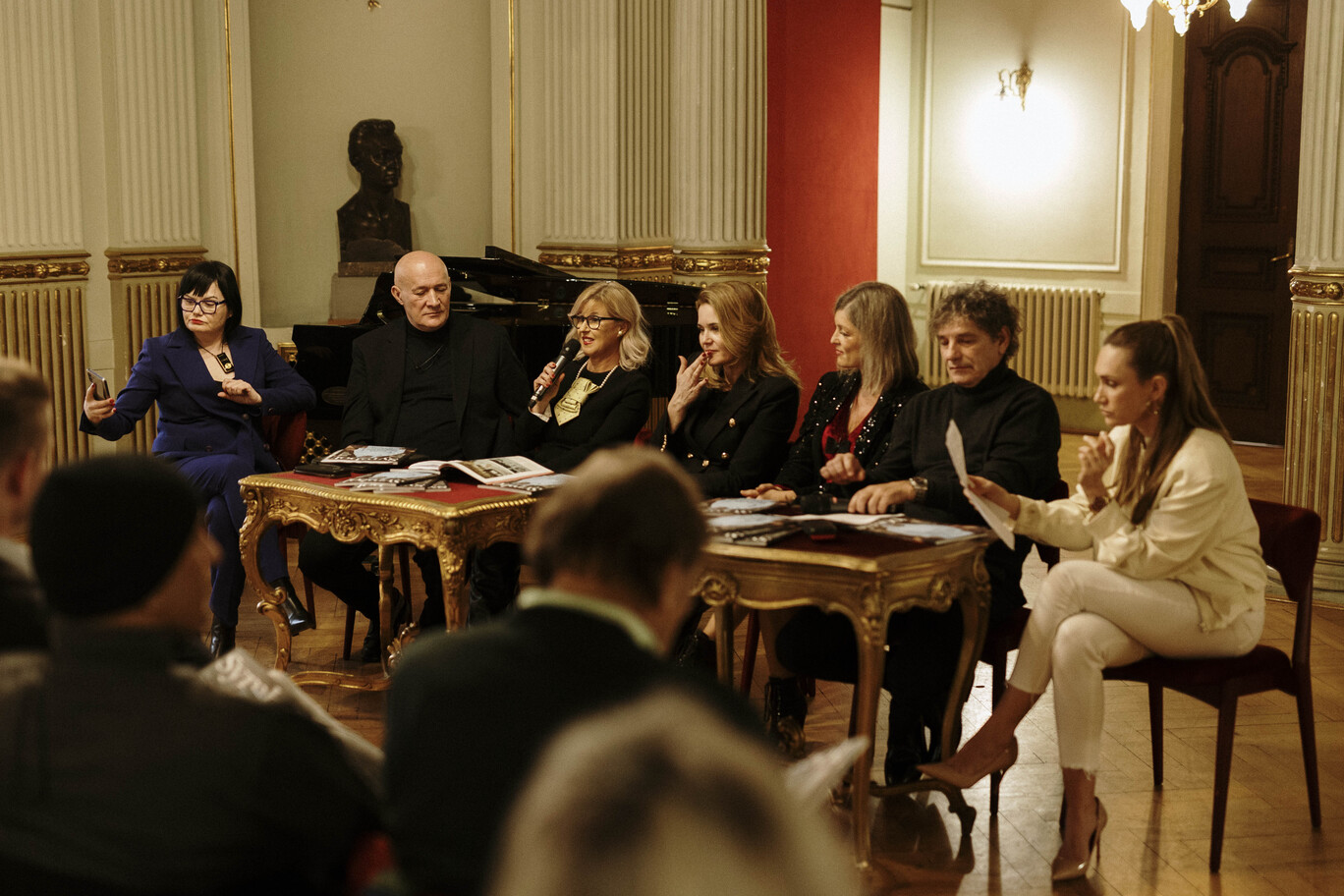
The book promotion written by former ambassador to Bulgaria (1993–1996), Croatia (1998–2000), and Serbia and Montenegro (2002–2004), William Montgomery, and his wife Lynn attracted great public attention.
Namely, the Montgomerys were not the standard diplomatic couple, which usually means somewhat distant and cautious in communication with hosts. On the contrary, they were extremely open and sociable, so wherever they were on diplomatic missions, they quickly became part not only of the local political, but also of the social and cultural milieu.
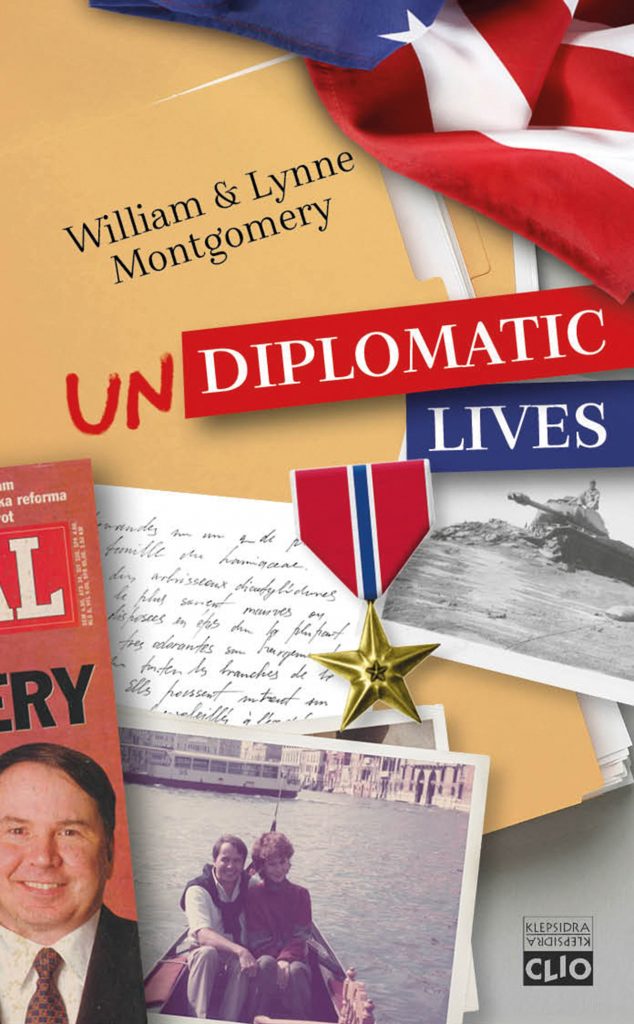
In the memoirs titled “(Un)Diplomatic Lives”, published by Clio, under the direction and editorship of Zoran Hamović, the Montgomery couple, alongside the political dimension of their mission, also describe this aspect of their activity.
William Montgomery was a remarkably successful ambassador. He was directly involved in the fall of the communist regime in Bulgaria, the transfer of power from Tuđman’s HDZ to the democratic coalition, and in the removal of Slobodan Milošević and the establishment of democracy in Serbia.
Mrs. Montgomery said in an interview for our magazine that they spent most of 2024 writing the book.
– Each of us sat in different parts of the house. Then we would print out what we had written that day and discuss it over a glass of wine. It was an experience I truly enjoyed.
She noted that throughout their marriage, she and Bill tried to build their careers in parallel.
– We combined our joint careers (mine was in academia), our partnership in diplomacy, running households, and raising three children. As with many other people in similar situations, nothing is perfect. You learn from mistakes and with each new experience you try to be better.
Mrs. Lynn Montgomery recalled the phenomenon of the “špica” in Zagreb.
– It was customary for many people in Zagreb to stroll through the city on Saturday mornings and have coffee somewhere in the center. I think there was also an element of ‘being seen’… Our usual spot was Charlie café, and Mr. Mesić, who would later become a key political figure, was often there as well. But at the time, he was simply Stipe.
From then on and for many years later, for every humanitarian action where I needed his support, he was there. I considered him a true gentleman, always willing to help. After he became president in 2000, I was sitting with Bill and some political officers at the embassy. They asked if I could get President Mesić’s mobile number. I have it, I said — to their great surprise. Those moments are priceless to me and still bring a smile.
This anecdote best illustrates how important a role Mrs. Lynn played in her husband’s diplomatic missions.
William Montgomery explained that his fundamental rule for successful diplomacy was to come as close as possible to a complete understanding of the culture, mentality, and history of the country he was in.
– That means constant meetings with presidents, ministers, businessmen, media people, but also ordinary people in everyday life. As anyone who knows her can testify — Lynn is wonderful at connecting people, organizing events, and not only complementing me, but also creating her own positive image of the United States.
He admits that his appointment as ambassador to Zagreb was the best posting he could have wished for.
– I was already specialized in this region. Croatia was emerging from a difficult war, and there was plenty of work to do. In other words, I really couldn’t have been more satisfied.
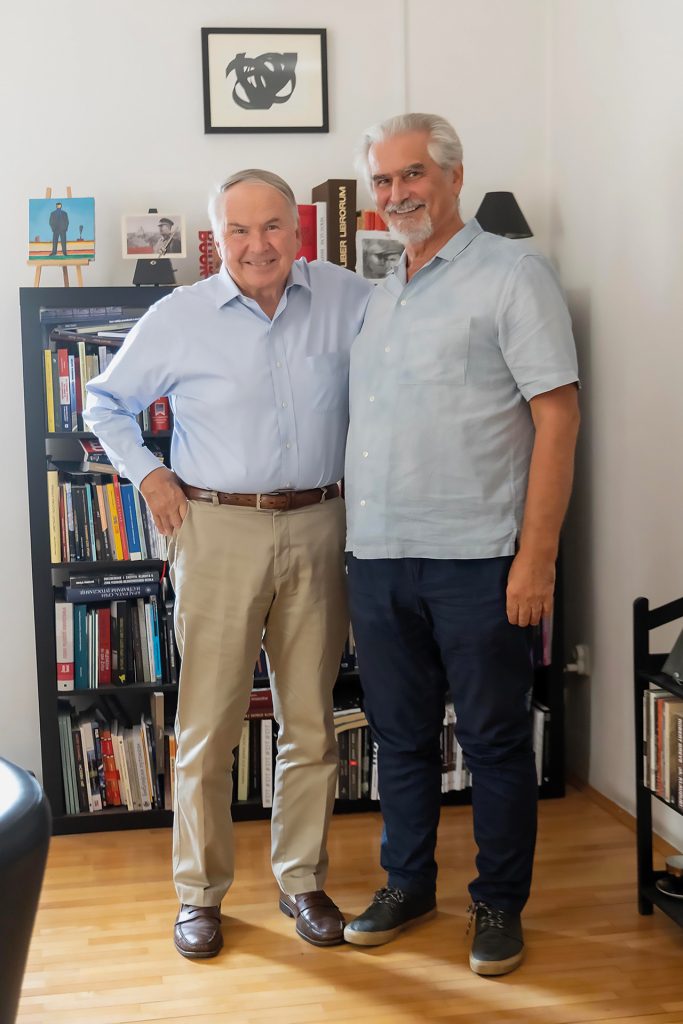
He says he cannot complain at all about his reception in Croatia.
– The far-right wing of the HDZ was mostly unfriendly and unhelpful — including a call to declare me persona non grata. However, the rest of the HDZ — the large majority — were friendly and ready to cooperate. Many of the positive achievements of my term were the result of collaboration with those constructive and positive HDZ ministers. Almost all other parties, the media, people from artistic circles, and the wider public were very cordial and willing to cooperate. I think most Croats at the time wanted stronger ties with the European Union and the United States. I was in Croatia at the right time.
That atmosphere was one of the reasons why the Montgomerys decided to live in Croatia after finishing their diplomatic careers.
– I had a long love affair with Dubrovnik! – William Montgomery laughs, adding:
– Thinking about retirement, we both decided that the Dubrovnik-Cavtat area was perfect for us. It also allows us easy travel to other countries in the region. The lifestyle here was simply better. We kept friendships with everyone we met during our service.
Mrs. Montgomery describes how they had very little free time, but one thing they did regularly was take the children to the sea.
– One summer we stayed in Cavtat, at the Hotel Croatia. It was wonderful watching the bay and Cavtat one evening. Stunning. We got the idea that one day we might retire there, maybe buy something. At that time, there wasn’t such international interest in the Croatian real estate market, so it was still possible to find something.
We were lucky that a kind local told us that some Canadians wanted to sell a three-story house on the waterfront, in completely dilapidated condition. I looked at it and immediately saw it was a huge job because the house was practically uninhabitable. From the ground floor, you could see straight through the roof. Still, we decided to buy it. It was a long process for foreigners, especially since the house was under cultural protection and required thorough restoration that needed special permits.
We had a very hard time with contractors, so in the end — while I was living in the house without heating and teaching at the American College in Dubrovnik (during our service in Serbia) — I had to threaten the contractor with the police to make him comply. I felt like I was stuck in a bad movie about naïve foreigners buying property abroad. Still, when it was all finished, the house was beautiful…
But after a few years they sold the house and decided to restore an old olive oil mill from 1601, which had been burned in the Homeland War.
– That restoration lasted seven years, but I am very pleased with it. Again, it was similar chaos with the contractors… But in the end it all turned out well and now I live in the best village in Croatia – she says happily.
William Montgomery emphasizes that he and Lynn had no problems adjusting to life in beautiful Zagreb.
– We went to many concerts at Lisinski, as well as the Croatian National Theatre, most often to the ballet. Thanks to Lynn and her efforts to organize charity performances at our home, we met and befriended many artists and singers.
While he mostly dealt with political issues, his wife traveled around Croatia trying to help those in need. She visited Slavonia about thirty times. She says her first view of Vukovar and the surrounding destroyed villages was a real shock.
– Everything looked horrific, burned and destroyed; traces of bullets and mortar shells could be seen everywhere on the remaining walls. Houses could no longer be called homes, and businesses, churches, and factories were devastated.
Lynn also helped restore the roof of the Franciscan Monastery in Dubrovnik, and helped clear mines from part of Srđ, above Dubrovnik.
Ambassador Montgomery says that to describe the difficult moments in his career would require a much longer article.
– Almost every mission brought difficult moments — some due to local politics, some due to problems with other State Department employees, some due to my determination, and some due to my temperament. I don’t even know where I would begin.
Regarding his work in Zagreb, he says it was significantly complicated by the fact that other parts of the U.S. administration — especially the military and intelligence services — had excellent relations with Tuđman’s government during the war. Their view was much more positive than that of the State Department and Secretary of State Madeleine Albright.
– Only upon arrival did I realize the depth of that division, which often seemed almost schizophrenic – he says.
At the credential presentation ceremony to President Franjo Tuđman, there was a formal ceremony. Montgomery gave a short speech in Croatian, and Tuđman responded.
– Then he invited us to sit for a short conversation. What we heard was a variation on a theme I later heard countless times, whether in private conversations, in the company of high-level American officials, or at meetings with the entire diplomatic corps in Zagreb: Croatia is a thousand-year-old civilization that never gave up the fight for independence; followed by a list of Croatian heroes and greats through the centuries; the main problem in the region were the Bosniak Muslims, and the international community had waited too long to recognize Croatian independence – he recalls.

Montgomery recounts how President Tuđman hated the International Criminal Tribunal for the former Yugoslavia (ICTY) and forbade any state official, including the military, from speaking to its investigators.
– As a direct consequence of that refusal, the ICTY reviewed the evidence it had and decided to indict three more Croats for war crimes, including the chief of staff of the new Prime Minister Ivica Račan. My government, learning that this was being prepared, ordered me to urgently consult Račan to warn him of the upcoming indictments and encourage him to change Tuđman’s policy of non-cooperation and immediately inform the ICTY of that change. We suggested he invite the investigators to Zagreb to meet whoever they wanted.
But since Račan and the government were on an island, Montgomery used an extremely fast, small speedboat, operated by the U.S. military, which was anchored in Cavtat.
– It was intended exclusively for the evacuation of Montenegrin President Milo Đukanović if Milošević, with his control of the Yugoslav army, moved against him.
On the dock, Račan met Montgomery and immediately understood the danger and need for urgent action.
– That day the ICTY was informed of the policy change and immediately sent its investigators to Zagreb. The indictments were never raised because the chief of staff and others clarified the situation sufficiently – Montgomery concluded in his interview for Symbol.