Written by: Iva Koerbler
Photos: Tomislav Marić
…
The now legendary Buljat Gallery in Dežman Passage, Zagreb, has been at that location for forty-five years and is one of the city’s oldest galleries private galleries where artworks are not only sold, but also exhibited in small-scale shows.
Many artists had their first exhibitions here in the 1980s and 1990s, including doyens of Croatian painting—without whom today’s contemporary art scene wouldn’t be what it is. Among them were, for example, Ferdinand Kulmer, Edo Murtić, Zlatko Prica, Oton Gliha, Miljenko Stančić, Ljubo Ivančić, Ivan Lesiak, Miroslav Šutej—artists whom gallery owner Ivo Buljat not only held in the highest regard, but with many of whom he formed lasting friendships over the years.
But all of this unfolded without much media attention; it was well known in art circles that Ivo Buljat was a “tough nut”—he didn’t just let anyone hang their paintings in his gallery, nor did he allow forgeries to accidentally end up in his offerings. Nor would he fill the space with just “anything and everything,” without applying strict criteria. And now that his son Milan Buljat, a financial expert, is continuing the business, it’s fair to say that Galerija Buljat is the oldest family-run gallery in Zagreb after Galerija Ulrich.
Ivo Buljat often jokes that he’s one of the few in this line of work without a police record, and that it doesn’t pay to be dishonest if you see yourself in the gallery world for life.
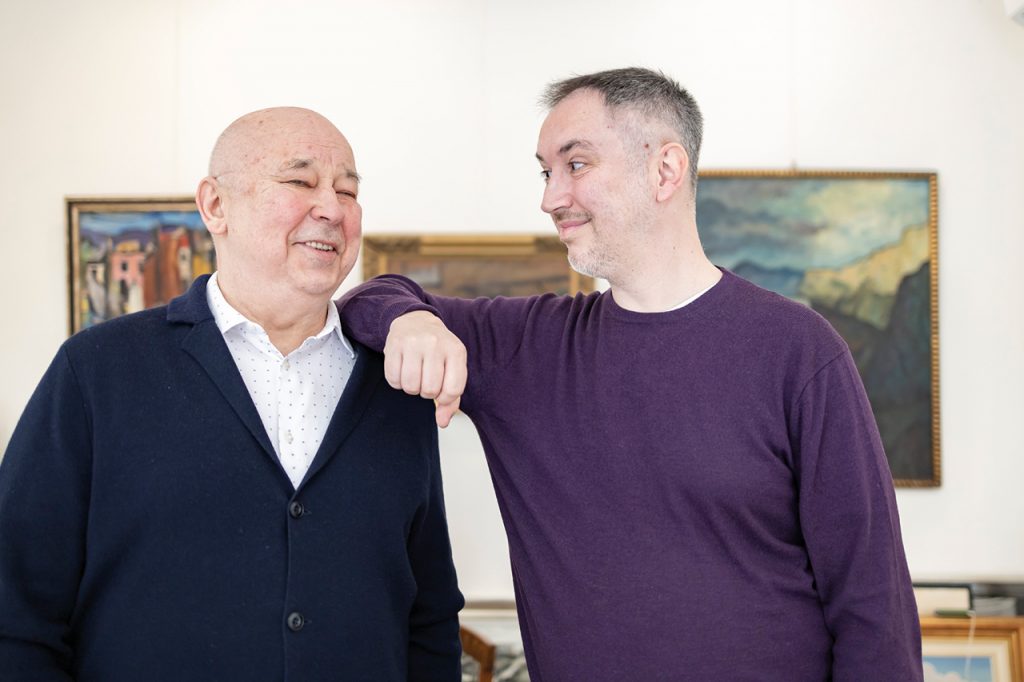
– Did I know in my youth that I’d become a gallerist? Actually, everything pointed to it—I was exposed to art very early on, since my father had a workshop for framing artworks in what is now our gallery. I learned a lot from him about painting; many important artists came to us. I encountered colourist and geometric abstraction as a young man, back in the 1960s. That later shaped my taste and the type of artists and works I would choose. I came to love abstract art – he recalls.
In his youth, he also followed and got to know the artists of the Gorgona Group and the New Tendencies movement from the 1960s—formative years that marked their rise on the Croatian art scene. These included Julije Knifer, Vojin Bakić, Eugene Feller, Vlado Kristl, Aleksandar Srnec, Ivo Gattin, Josip Vaništa, and Dimitrije Bašičević – Mangelos. Later came younger artists with whom he was more closely connected generationally, such as Stipe Nobilo, Antun Boris Švaljek, Antun Mateš, Velimir Rački, Dalibor Jelavić, Željko Lapuh, Tihomir Lončar, Munir and Fadil Vejzović, Zlatan Vrkljan, and Vatroslav Kuliš.
Milan Buljat continues to keep pace with the times and current trends in the global art world.
– We can’t resist it anymore; we listen, we observe, and we try to combine what might be interesting. We follow both Croatian and international artists from the New Tendencies era—but their works are now highly priced and hard to come by – he points out.
Ivo Buljat claims that there is, in fact, no truly good private gallery left in Croatia:
– The old ones have disappeared, and the new ones lack knowledge of the craft—they dabble too much. Galerija Kranjčar is good, but it’s an exception. Another issue is that for a gallery to be successful on the market, you shouldn’t constantly need to invest your own money—it should be run on profits from sold works. And that’s a problem we all face in Croatia…”
He adds that from the very beginning, even as a young man, he had a desire to exhibit only the best Croatian artists. And to this day, that principle remains.
– Edo Murtić and Zlatko Prica exhibited here three or four times each – he says.
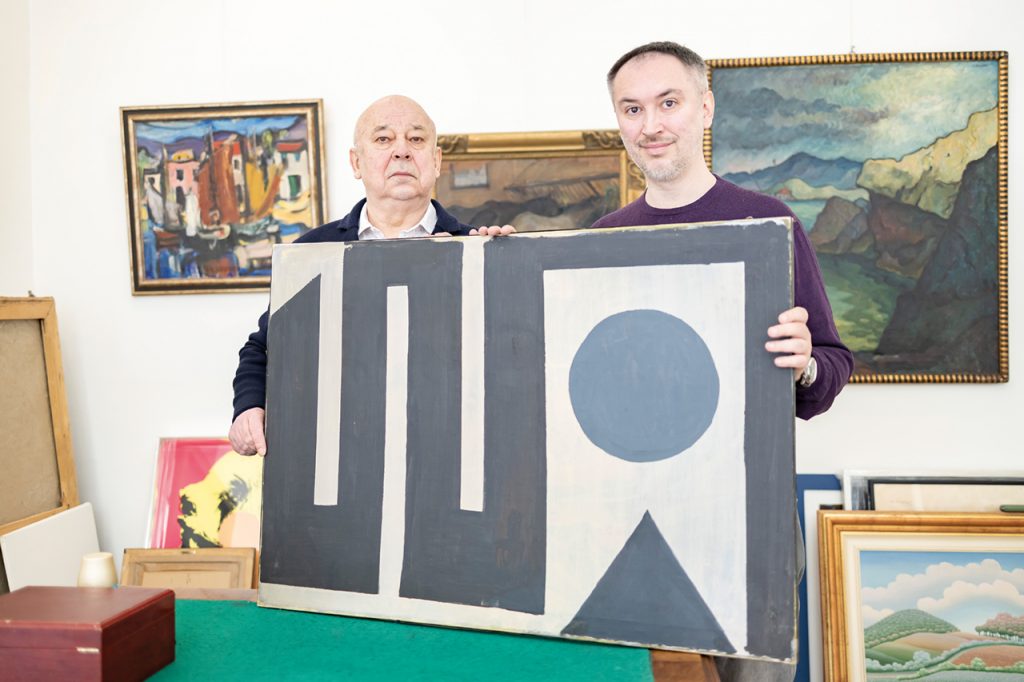
He emphasizes that just because some curators or buyers can recognize an artist’s name, it doesn’t mean they truly understand or feel the art:
– It takes a lot of hands-on experience. A real curator needs to do the rounds—visit studios, galleries. You can’t just sit in your office, isolated from the world. In my youth, I learned the most from the artists themselves, when they would come to my father to have their paintings framed. I learned how to recognize a good painting—its composition, colours, texture—but also how to tell if a work was fake. Many important artists came to my father, so I was exposed early on to works of Croatian intimism, colourist, and geometric abstraction. That was back in the 1960s – he says, then continues:
– I became most interested in and specialized in post–World War II art—that’s the aesthetic I connect with the most. I’m always most excited when I come across works from the Gorgona Group, EXAT 51, or New Tendencies. Those pieces are highly sought after at the moment, but I also personally like them the most. I feel a bigger rush of adrenaline when I find a piece like that than when I actually sell it! I love the research and the hunt for great paintings and sculptures. And once you sell it, the excitement fades a bit. That’s it—you’ve parted with the work forever…
Both father and son stick to a guiding principle: no work enters their gallery that they wouldn’t want to have in their own home. Interestingly, they often leave walls bare to give themselves a bit of visual rest from art—which sometimes surprises their friends.
– You know the saying: the cobbler wears the worst shoes. That’s kind of how we operate. A lot of people probably imagine our home walls packed with paintings, but we’re not really into that – Milan Buljat says with a laugh.
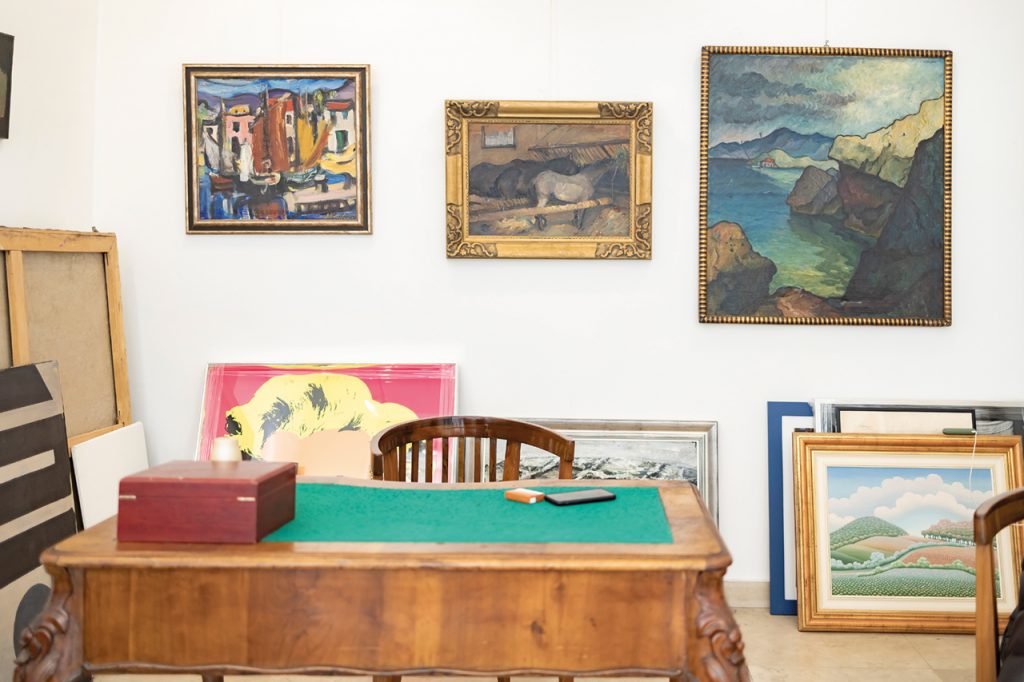
Ivo and Milan agree on one thing: the best buyer is the one who listens to advice.
– Money isn’t the most important thing. What matters is when a buyer trusts you enough to let you guide and advise them on what to buy. Especially when someone is putting together a meaningful private collection. You want to offer and show them the best pieces, protect them from making poor choices—you don’t want them to just buy impulsively. And then, often what happens is you become good friends with that kind of buyer—that’s what happened with my father, and it’s beginning to happen to me as well,” Milan Buljat tells us.
Ivo Buljat points out that he became a close lifelong friend of painter Zlatko Prica, meaning that trust extends to the artists too—not just to the collectors.
– The most important thing in this business is not to lie. Don’t lie! That is, if you want to last long in the gallery world. I’m proud that throughout my entire career, I’ve never sold a forgery. That’s a big deal! Maybe it’s luck, maybe it’s knowledge… In general, many values in our society have been turned upside down. Sometimes, people actually listen to us gallerists with lots of experience more than to some curators in institutions who, over their whole careers, have only visited a handful of studios. In that sense, I consider myself a lucky man. And when it comes to collectors—if the buyer listens and adopts your advice, then you get a great collection. In the long run, it’s not about rushing to make a sale. If you feel that a certain work by a particular painter isn’t the right fit for the buyer’s collection, you should tell them to wait for a better piece to come onto the market. That’s how trust is built. Running a good gallery isn’t just about buying and selling – explains Ivo Buljat.
He adds that an exhibition must always reveal something, it’s not enough just to hang pictures on a wall:
– Today, from each of Croatia’s six art academies, five, ten, or fifteen artists graduate every year—but only a few manage to stick around. One or two might be exceptional, truly talented, and the rest are just for the market, as Ljubo Ivančić once said. Unfortunately, the current teaching staff at the Zagreb Academy hasn’t produced extraordinary painters. It seems to me these young artists are trying to find their own way,” he concludes, with a tone of quiet resignation. They’re planning to renovate the gallery; Ivo will hand over the business entirely to his son Milan, although he’ll undoubtedly still come by, sit at his desk, and smoke his signature cigar, as always.
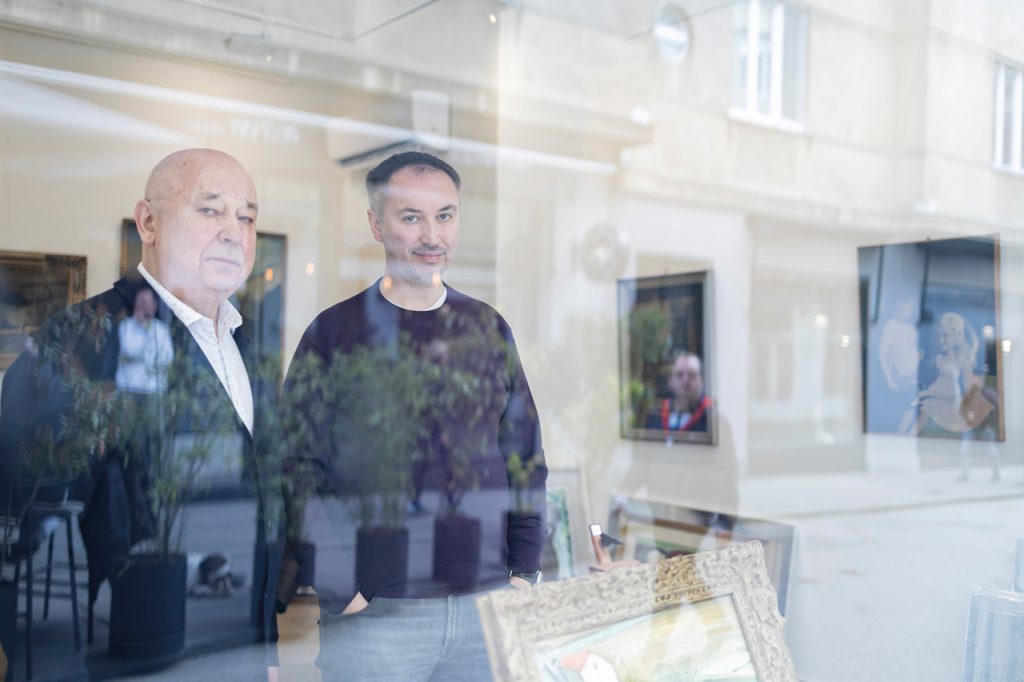
At the end, we ask him: Does he have any unfulfilled dreams?
“I do! To exhibit just one painting in the gallery—and for entry to be by appointment only, like it is abroad. Then, for example, I could present a small Renoir, a Klee, or a master of New York abstraction, and from the sale of that single painting, live peacefully and stress-free for the whole year. Who knows—maybe one day my son Milan will be able to do that. He’s continuing the work with great enthusiasm and erudition, carrying on our family gallery. But all things considered, I wouldn’t change anything about my life—even though I’m often very critical and cynical; people say I’m known for it. Maybe my attitude even drove away a few buyers—but those were probably the wrong buyers who wandered into my gallery by mistake. A true collector, a real buyer, doesn’t back down—no matter what. Just like me. In the end, we have art to heal us and protect us from reality—when reality becomes unbearable. And today, our reality really is unbearable – concludes Ivo Buljat.