Written by: Iva Stilinović Grahovac
Photos: Tomislav Marić
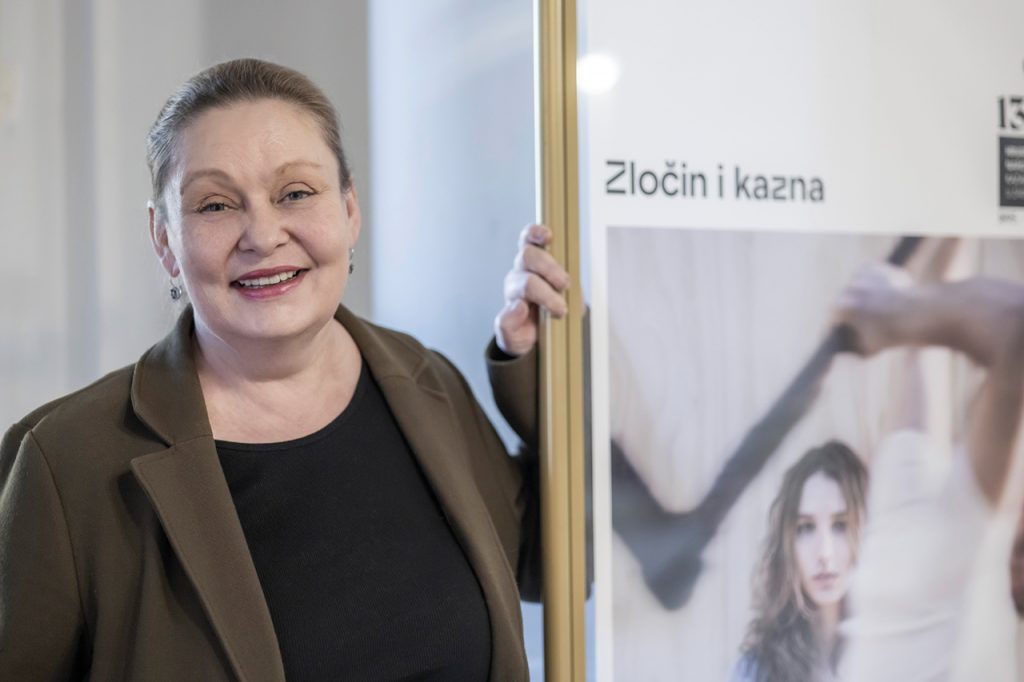
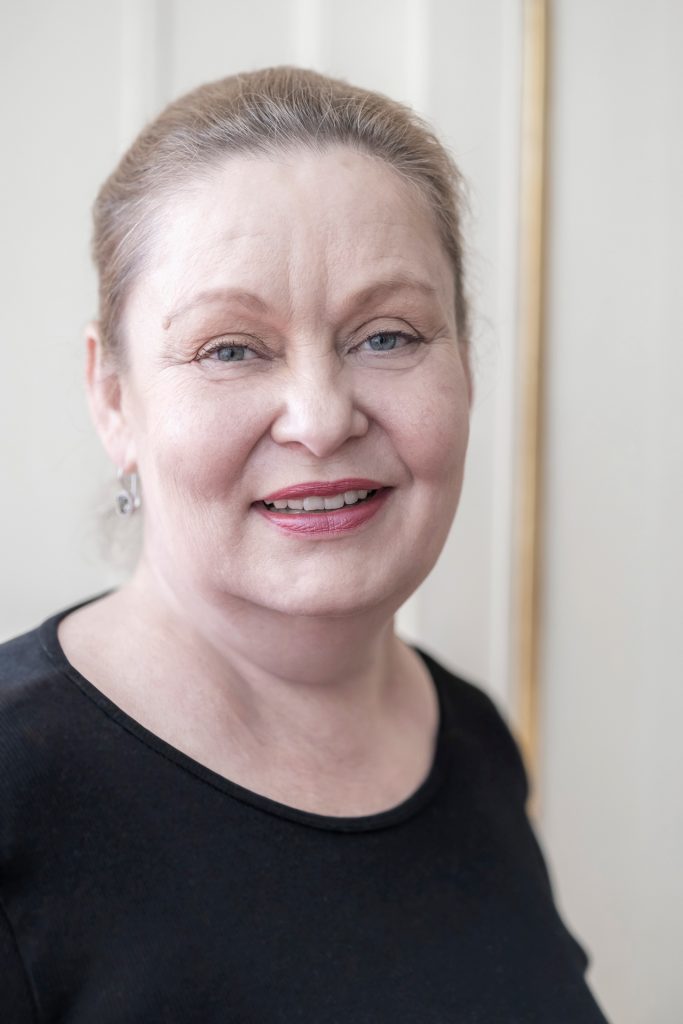
One of the most beloved Croatian actresses, Ksenija Marinković, has earned deep respect from both the profession and audiences over a decades-long and rich career—one that few can achieve. In roles that reflect her versatility and ability to embody a broad spectrum of characters—from strong, complex women to gentler and more vulnerable ones—she brings true authenticity and a striking impression to everything she does.
At her home theater, the Croatian National Theatre in Zagreb, she completed her work in March on the play “Crime and Punishment” by F.M. Dostoevsky, directed by Jernej Lorenci, and before the end of the theater season, she faces another major project: the play “The Years” by Nobel Prize winner Annie Ernaux, directed by Belgrade-based director Jovana Tomić.
How are you generally drawn to a project you’re working on?
For an actor, just receiving an offer is already a big deal. In addition, it’s very important that when you accept a project, you don’t do it just because it’s a job. Sure, when you’re young, it’s not like that—you’re still building yourself—but as you get older you’re still building, but as you get older, motivation becomes very important. What usually motivates me is the script, then the director, and only after that—my role within the project as a whole. Both big and small roles matter equally to me if I feel they’re appropriate.
You’ve just finished Crime and Punishment, and The Years. Two big projects in a short time. Do you let go of a role quickly so you can fully commit to the next one?
When a play is finished, it continues to live its own life. After the premiere, it goes into a drawer in your brain, where it stays as long as the play is in the repertoire. And when its stage life ends, it disappears from that drawer instantly, freeing up space for a new performance.
What was the process like working on Crime and Punishment? During rehearsals, everything seemed smooth, beautiful, almost like a meditative environment.
Just getting a role in that classic evokes a deep sense of reverence. I think everyone entered the project very humbly because you can slip on every page of the novel. It was a huge job for playwright Dino Pešut and director Jernej Lorenci—they had their framework, but we shaped the details together and explored where the story wanted to take us.
Have you ever turned down a role or a job?
Of course I have. Sometimes because I physically couldn’t fit it into my schedule, and other times because it just didn’t suit the phase of life I was in. If I have time, I’ll take on any project where I see even the tiniest spark.
And how do I turn down offers?
I generally handle it diplomatically…
What would you say was your big moment on stage?
It was the 1986/87 season, in Paolo Magelli’s first direction at Gavella Theater, in the play “The Mad Days.” And on television, it was the film “Two Loves” by Vanča Kljaković—that was when TV dramas were being produced on a large scale. Those were key early moments, when I was still at the Academy. Then everything began to roll—an invitation from “Teatar u gostima,” then ZKM, and then the first big film…
Every profession comes with its own struggles, doubts, and dilemmas. How do you, as an actress, deal with inner turmoil?
With great difficulty. What I’ve realized in these 36 years is that actors are incredibly vulnerable. And that vulnerability is constant. Even if you have a track record, you still have to prove your ability again and again. The stage is absolutely unforgiving in that sense—even an audience that loves you can be unforgiving. You have to learn how to survive the anxiety that comes with not acting, but also the anxiety that arises when you’re working too much.
Both too much and too little work can be difficult—it can even leave physical consequences sometimes. Actors today are very aware that the comfortable times for our profession are long gone—when one could easily and steadily live out an acting career.
It’s easier and more secure if you have permanent employment in one of our theater ensembles, right?
Definitely. But today there’s an overproduction of actors, and it’s hard to stand out. Also, it seems to me that the love for a specific actor has faded—especially in terms of how they’re paid or valued as irreplaceable. Today, nobody really feels special anymore. And younger generations will soon become aware of this, they’ll have to fight much harder for themselves, and we’ll see more freelancers than permanently employed actors.
Too many or too few projects—both leave their mark, don’t they?
No doubt about it—it’s always better to be working. Not working, for us actors, is somewhat shameful, uncomfortable… If an actor doesn’t feel like part of a team, especially in large ensembles, it can be devastating. That sense of belonging is really important.
How can an actor help themselves during times without work?
During those periods, I read a lot, went to see other plays… Recently, I spoke to a colleague who said that during such times, she was even afraid to go out in public, worried someone might ask what she was working on. She only went to the theatre as an audience member, congratulated her colleagues—to lift herself up… And she said it worked well. I did the same.
Is a big ego essential—or harmful—for actors?
Depends on the person.
For you? Do you think you have too much or too little?
I used to think I had too little. Then I realized that might’ve just been a form of false modesty. In the end, I decided I don’t want to think about my ego at all. Sure, I know when it’s bruised—but overall, I try not to dwell on it.
There’s a fine line between confidence and ego, isn’t there?
Anyone who’s confident is welcome. But that doesn’t mean every confident person is also smart—maybe they just have a big ego. On the other hand, someone could be confident, smart, have a big ego—and still be excellent. Nothing is black and white. Then again, someone with a small ego might need to work on that, because it’s often a sign of insecurity.
What’s your take on today’s film and TV production, especially with the flood of streaming platforms?
For the big streaming services, one successful series generates enormous revenue. It’s a massive machine, so people are fighting just to write scripts for Netflix or similar platforms—just to break into the business that way.
Do you watch any of the streaming platforms yourself?
Of course I do. When I have the time, I can’t stop watching them.
How do you balance—and how have you balanced—your artistic sensibility with commercial interests?
I’ve agreed to all sorts of things… But when I work on different projects, I try to switch genres and styles. At one point, I did three dramas in a row, and then I was invited to do a children’s play. And working on it—it was like I was healed.
Can you recall a time in your life when you had to make a very difficult professional decision?
To be honest, I’ve never really had to make hard professional choices. The only thing is that in the past fifteen years, due to being overworked, I’ve had to stop and slow down three times—just to catch my breath.
Are you the most sought-after Croatian actress today?
No, no… I’m not.
Is there some research or statistic? How do you know you’re not?
Oh, there are actresses today who work more than I do… But I can say that at one time I really did work an incredible amount and was in very high demand. For example, at the 2016 Pula Film Festival, I had five films showing! It feels impossible even to me…
Years and years of work, and yet your motivation seems unchanged?
I always want to keep going—I always want more! I can’t allow myself to treat this like just some regular job I define. It’s a calling—it pulls me in, it interests and inspires me. Because if that’s no longer the case, maybe it’s time to change professions.
Where do you find joy today, both privately and professionally?
Privately, I find joy in coffee, a cigarette, television, relaxing on the couch, and maybe taking a walk. Professionally, in working with great people and being part of quality projects—like Crime and Punishment. That was a true little artistic exploration…
Professionally speaking, I really consider myself a lucky woman. I’ve worked on a lot of beautiful things.
Would you agree with the idea that some of the greatest artists are also the most humble people? Since we’re on the subject—we’d say you belong in that category too…
A fulfilled and working person has no need to pretend to be something they’re not. But there are all kinds of us—some more humble, some less, some this way, some that. There are brilliant individuals who are very difficult to work with, who can be quite unbearable in some ways—but they work professionally and beautifully, so you forgive them everything.
The media love you. You’ve done hundreds of interviews—but dealing with the media is a skill, isn’t it? What advice would you give young actors about that aspect of the job, which becomes inevitable once they gain some recognition?
I’d tell them, first of all: don’t let it get out of control. I’ve always stuck to the idea that I give interviews when I have something professional to say—when there’s a reason for it. I’d advise them to speak about the concrete work they’re doing, about things they know. Not to talk too much about their private life. The key, really, is to find a good balance between professional and personal.
What would you tell young actors about how to handle media attention?
I’d tell them, first of all, not to let it get out of control. I’ve always stuck to the rule of giving interviews only when I have something professional to share—when there’s a real reason. I’d advise them to talk about concrete things they’re involved in and knowledgeable about; not to talk too much about their private lives. Basically, it’s important to find a healthy balance between the personal and the professional.
You’re entering a new chapter in life—you’re going to be a grandmother. What are your expectations for that role?
Just that everything goes well…
Do you already imagine yourself as a hands-on grandma, a “babysitting grandma”?
I’ll definitely be a grandma who takes care of both the children and the dogs—as much as I have time for. I’ve even started turning down some things because I’ll soon need to start “babysitting.”
What would your reflection be on your career so far?
“…And now the end is near…” No, no, I’m just joking…
Here’s how I see it: I’ve managed to accomplish a few significant things, starting with the fact that I’ve worked with wonderful people and consistently found myself among the best of the best. That’s been a huge stroke of luck in my life—especially since it started happening early on, right from my time at the Academy.Second, I didn’t lose my mind when I wasn’t working.
And third—it really matters who you’re surrounded by, because that shapes your growth. Some situations in our profession can truly be harmful. What matters is being in an environment that supports your work and progress. It’s important that everything happening around you is real and honest—and that you are too, both in success and in failure.
All in all, I can say I’ve had a truly beautiful career.