Written by: Gea Vlahović
Photos: Fabian Landewee
…
When I look at all my experiences, fear becomes invisible, and the greatest gift is myself to myself,” says Selma Selman, one of the most intriguing contemporary artists of Southeast Europe, summing up, in this conversation we are having for Symbol, in one short sentence her path from the Roma mahal in Bihać to the world’s museums and biennials: from a little girl who sold paintings at the market to help feed her family to a contemporary artist whose works today circulate through European institutions and spark discussions on identity, value, and survival.
Born in 1991 in Bosnia and Herzegovina, now based in Amsterdam, a Roma woman and immigrant, Selma Selman has from the start consciously built her position from the experience of exclusion and limbo – between patriarchal family tradition and outside prejudices, between family poverty and the world’s art institutions. Her biography entirely defies the prejudices about what Roma, especially Roma women, can or cannot achieve. But while her story might sound like a success narrative, in reality, it testifies to constant struggle.
– In a broader sense, my art was formed through education and through attempts to recognize art in what would almost never be considered art – Selman tells us, and continues:
– Living in the Balkans, especially as a woman, you constantly have to prove yourself. Even for non-Roma women, it’s a challenge to win recognition in a male world. For a Roma woman, it’s a triple task: you have to prove yourself to your family and community, to your country, and to the wider world. You become a kind of migrant, constantly moving between expectations, living in an in-between space where you are never “enough”. At the same time, however, you gain rich experience – you learn to transform, to carry many identities in order to survive.
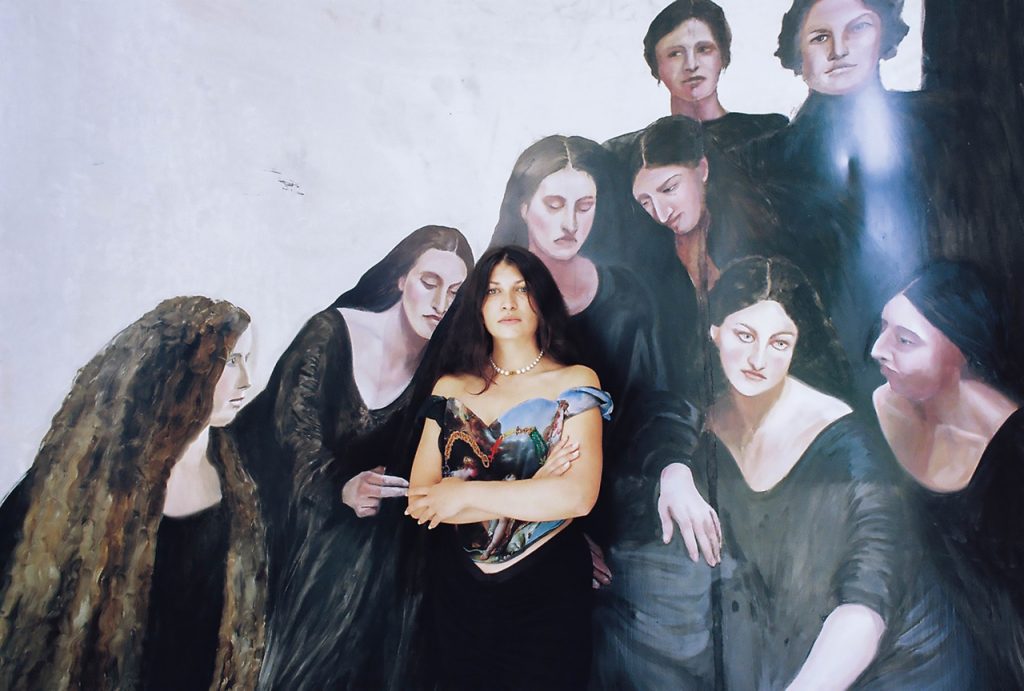
Maybe now, from this position that I’ve carved out for myself, it’s easy to say that, but I think real hell is for the young girls now going through the process of forming themselves – in the Balkans, but also elsewhere in the world. Life is cruel, and people are hypocritical; if they could, they would eat you alive – she says, adding that in educational institutions “you must prove double the intelligence in order to be accepted.”
She felt very early on what it means to be “different”. In her own village she was seen as “the beautiful pale girl,” while in town, as a Roma, she was branded “dirty and smelly.” That very experience of double non-belonging – white among her own, black at school – wove itself into her art.
– My Roma belonging for me is a tool, not an artistic expression. Life teaches you to first accept yourself, and only then everything else. I was conscious enough of my position to turn it into all those positions that suited me. I live in limbo and have no single tone or colour of skin – she says.
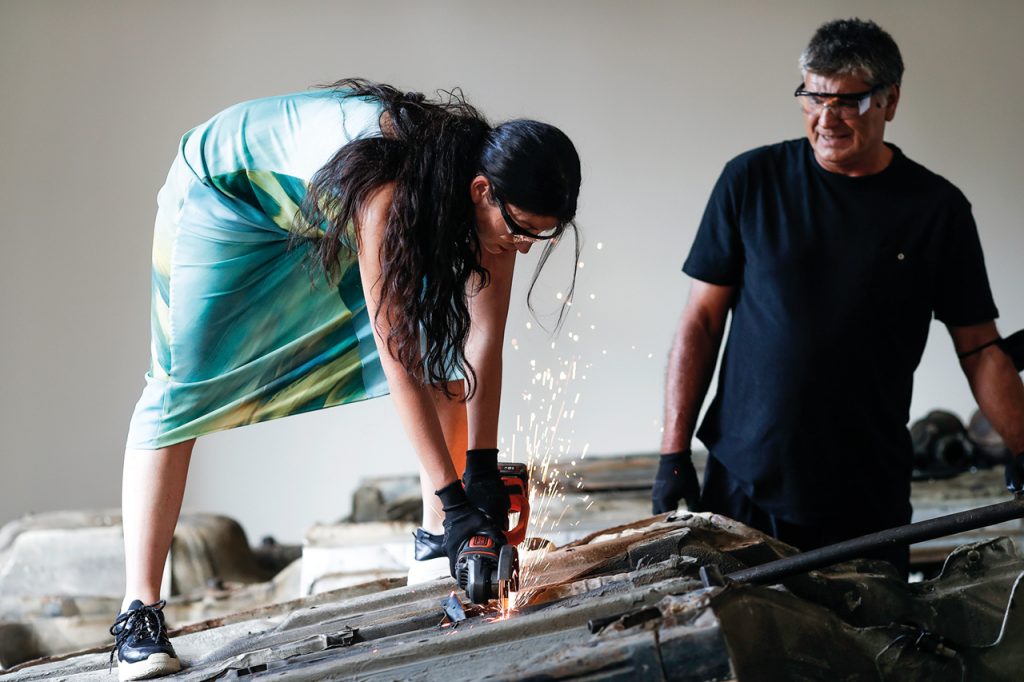
From that limbo arose her key gestures. When in performances she dismantles vacuum cleaners or motherboards, she is not destroying objects but transferring everyday actions from family survival into an artistic context.
– In my mahal, dismantling objects was a matter of survival; in the art world that same act becomes another way of survival, but through a different meaning.
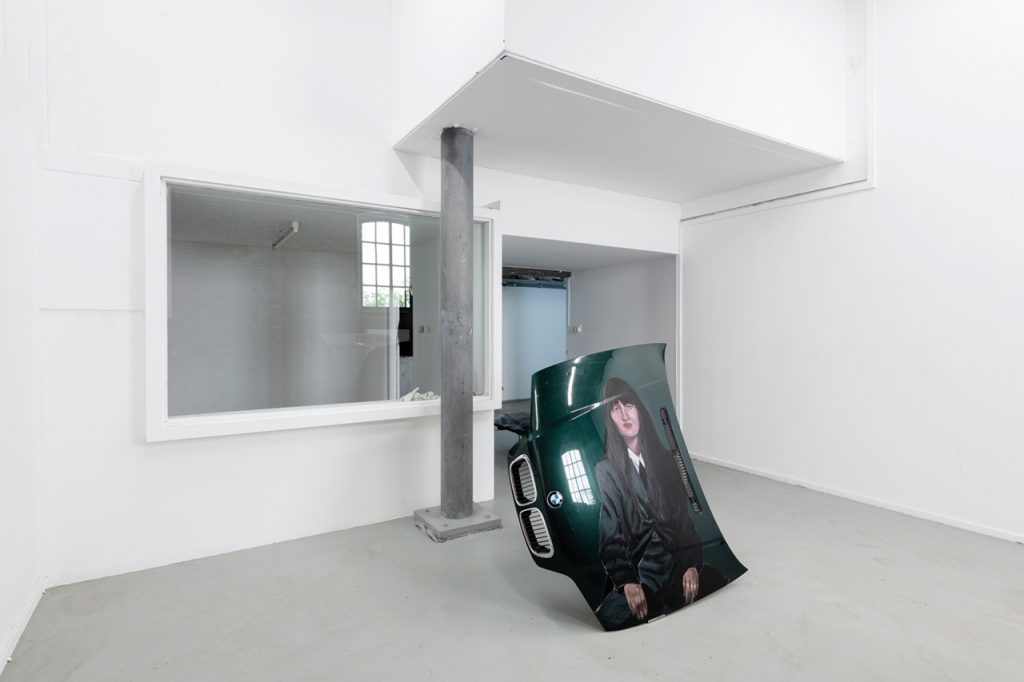
Her performances are at once rituals of liberation, artistic transformation, and political acts. Her family, which for decades survived by recycling metal, was also the first framework for her artistic path. Already as a student at the Academy of Arts at the University of Banja Luka, when she had no money for canvases, her father suggested she paint on metal plates from the junkyard. Thus arose her characteristic method of working with “dirty” and “worthless” objects, opening a space for value transformation – waste in her hands becomes an art object, and art becomes an extension of life.

The family, however, also played a heavier role: for a time they lived solely off the sale of Selma’s paintings, and they still live from her work.
– The role of my family is to be my family, and my role in the family is to be its saviour. And that role is not easy, because I am not God – she says.
As a girl, she painted and sold works at the market with her brothers; from the age of seventeen she was fully independent. Today, she says she barely remembers who bought all those paintings.
– In fact, it would be easier to say who didn’t. I think probably every second or third family in Bihać has at least one of my paintings – she laughs.
Selma would later graduate in painting in Banja Luka (2014), earn her master’s in transmedia, visual and performing arts at Syracuse University in the U.S. (2018), and through residencies and exhibitions develop an oeuvre in which painting, performance, installation, and recycling engineering create a unique language. She often calls herself an “alchemist” – drawing the valuable out of the invisible, turning the unwanted into the precious, and calling her knowledge of extraction processes a “tool of resistance” that she intends to share with those who can use it.
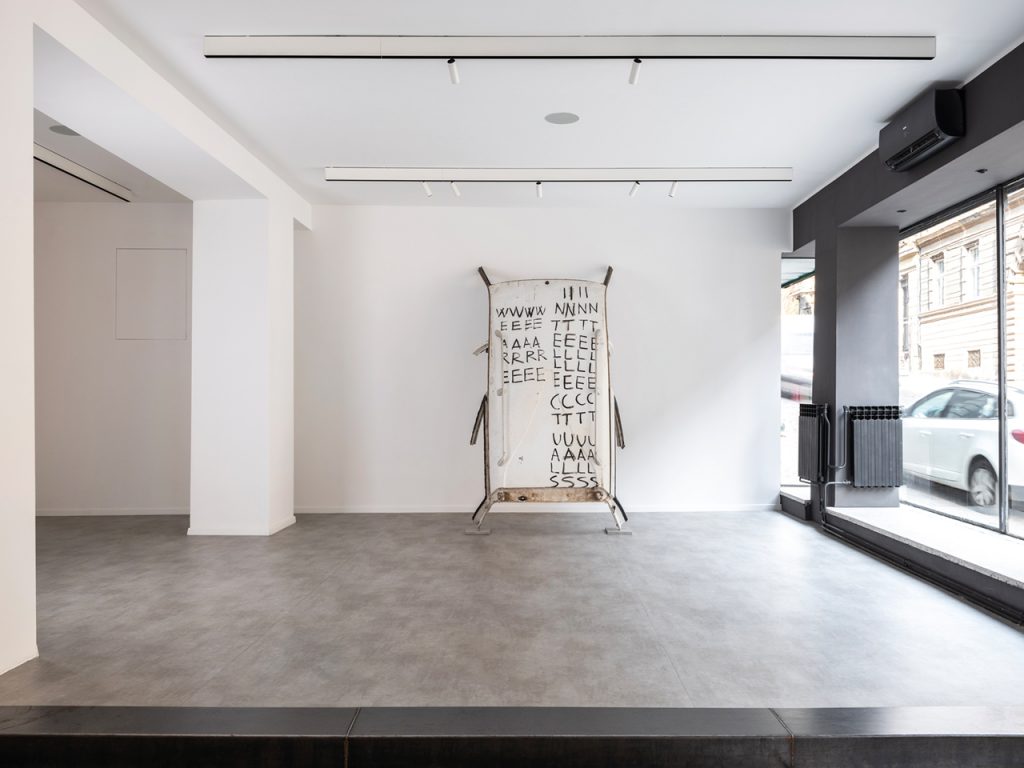
Her artistic path also led her to a residency at the prestigious Rijksakademie in Amsterdam, one of the greatest honours an artist in Europe can receive. Each of those steps involved breaking given frameworks and leaping over social and cultural barriers, and all of them shaped her sense of identity – Roma, Bosnian, female, artistic, and, ultimately, European.
– I have achieved what many artists don’t manage even in fifty years of career, and I believe most people are somewhat aware of that. But what shapes me is not the fact of those achievements, but art itself, and my constant search for it: constant questioning, attempts at communication, not the expectation that my art must necessarily influence someone. That is the way I transform my reality.
At the core of her practice lies the question of value. When in a performance she destroys a vacuum cleaner or dismantles motherboards, it is not mere violence against objects but a ritual of transformation: the same gestures from working-class everyday life move into the gallery, and their context and meaning change.
– I work by placing real actions from everyday life into an artistic and symbolic framework. In that process I transform value: something that was invisible to the naked eye becomes visible through the act of deconstruction – she explains.
One of her most intimate and most famous works, I Will Buy My Freedom When! (2014), with which she symbolically bought her freedom from her own family, was at once a work of art and an intimate reckoning with tradition.
– That work wasn’t literally ‘buying’ freedom, because I already felt free – Selman stresses.
She wanted to show herself, her parents, and future generations that there is always a way to resist. She sold her hair, clothes, and artworks, raised €11,000, and gave it to her family. Mostly to her father, who used that money to buy a blue Mercedes.
– In a way, that was my freedom – she claims.
That act also changed household dynamics: her father, until then firmly patriarchal, became – in her words – a feminist.
In Selma Selman’s art, personal experience constantly intertwines with the social and political, erasing the line between intimate and collective.
– My private life, when I want it, becomes public, and there is always a reason for that. If my life is exposed in the context of art, it’s because I chose it. If it becomes political action, that too is my decision – I decide what is public. Many of my works and ideas arise from personal experience – she says.
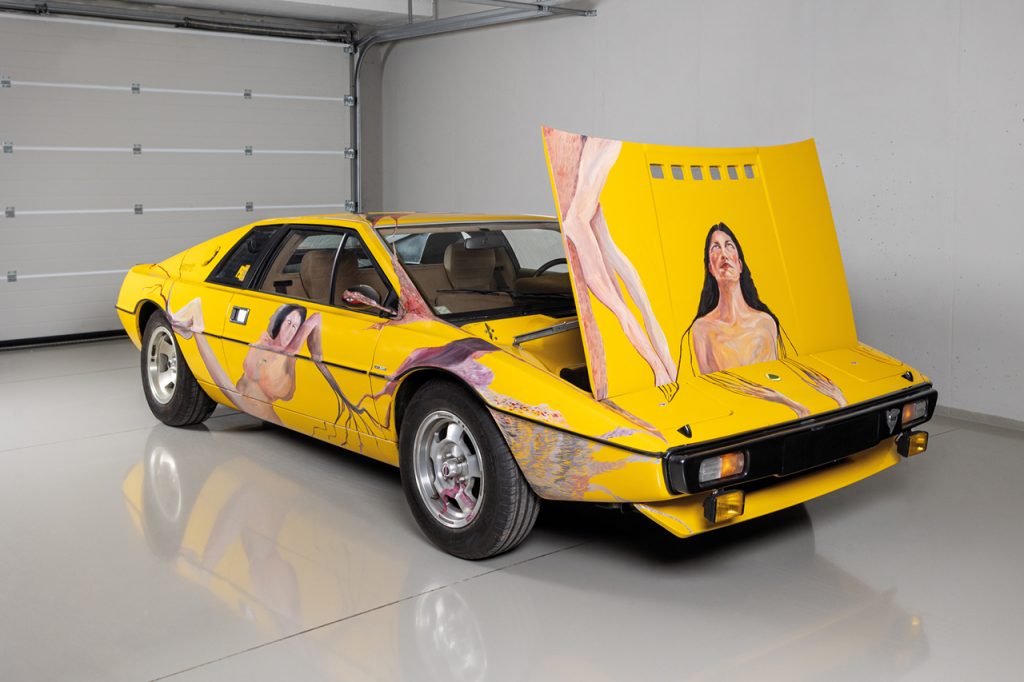
Asked where to draw the line – when to stop at personal confession and when to transform it into broader social commentary – Selman answers:
– That depends on the project. When I was younger, I felt pressure mostly related to financial support – whether I would even be able to realize a project. Today I am lucky to have more freedom of choice. The real challenge now is knowing when to stop.
In her exhibitions she often uses reduction of form, minimalism of gesture with a strong conceptual layer. She says she is not interested in delivering a message, but in creating space for a question.
– As an artist, I am not interested in sending direct messages. I want to offer a space where the viewer encounters the work and interprets it in their own way. If they feel it, they will understand it – she states decisively.
For her, that is precisely the role of the artist: to open communication with the audience and to hold space for the possibility of change. That ethic also shapes the relationship between art and activism: Selma does not treat the work primarily as an aesthetic object, but as the possibility of real change. But she rejects the role of prophet.
– If, as an artist, I had the answer to every question, I would stop making art. As long as I have questions – as long as I can question life and provoke reflection – I will keep creating. The moment I think I understand everything, that will be the sign to stop.
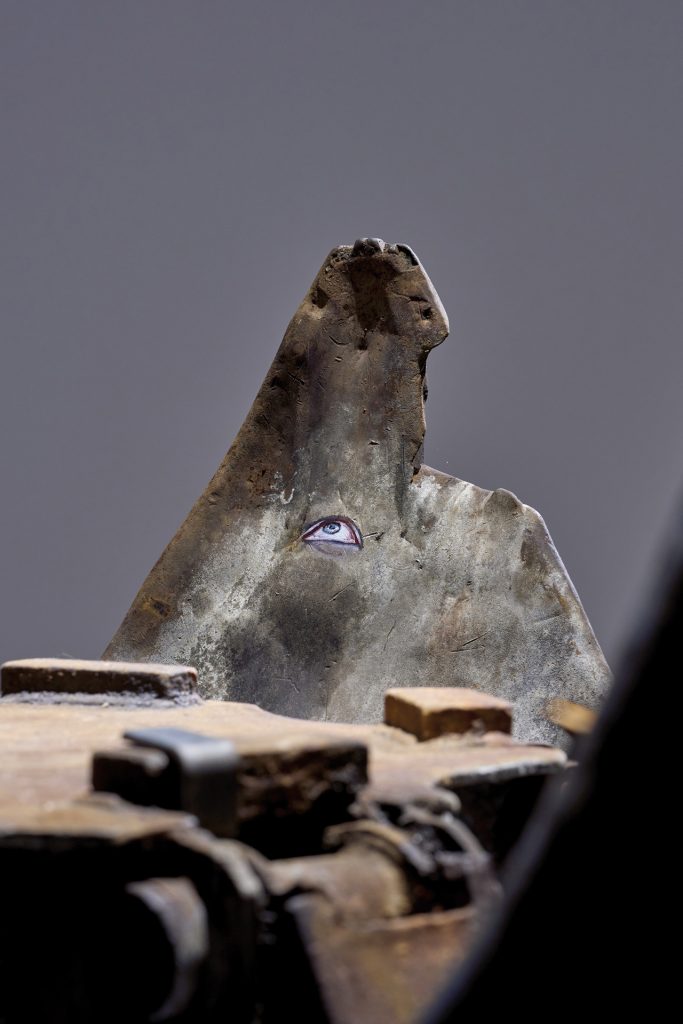
All key gestures in Selma’s world have concrete origins, and her oeuvre encompasses performances, installations, painting, work with metal, and recycling technologies. In the project Platinum (2021), she extracted platinum from car catalytic converters and turned it into an axe – at once a survival tool, a symbol of family history, and a precious art object. Behind such diverse media, it seems, stands one simple but strong link.
– My creativity – she says briefly.
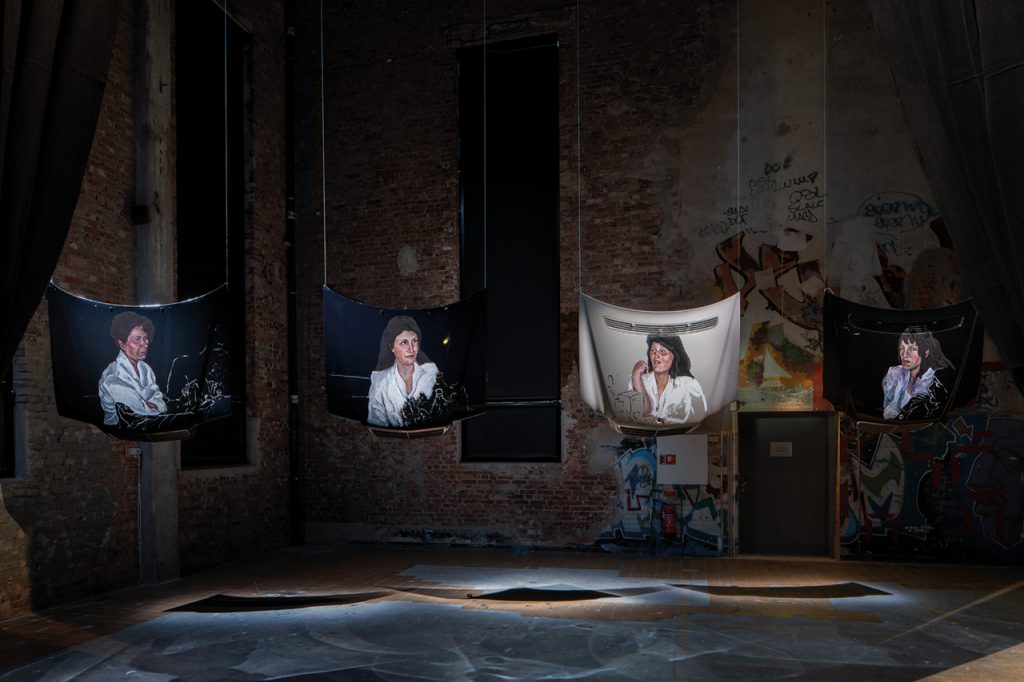
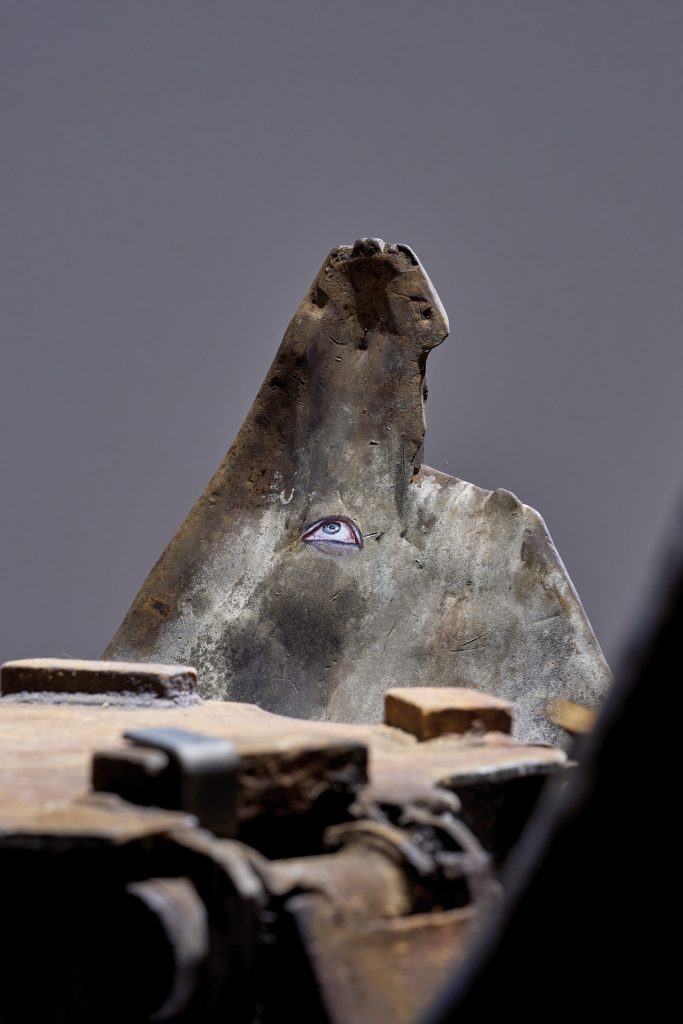
Working in different media gives her the freedom to question the realities in which she lives and create space for reflection.
– The role of the artist, at least as I have understood it all these years, is to ask questions, open themes for discussion, and create situations where meaning can emerge. I don’t consider it my role to give answers – the audience is the one that should discover them.
That dynamic is clearly visible in her performances, such as AEG Vampyr 1400, in which she destroys vacuum cleaners, or Motherboards (2023), where she extracted gold from old processors and shaped it into a golden nail, while in her monumental canvases Dirt 0 iron dust from the junkyard became material for modernist painting.
In the work A Pink Room of Her Own she reconstructed the room her mother had longed for as a girl, but never had, because at thirteen she entered a child marriage. Each of her works oscillates between personal and collective, intimate and universal.
– The reason why my performances often include the deconstruction of objects is because that’s what people in my mahal have always done – I simply transfer those actions into a different context. The gestures remain the same, but the audience changes. In Ružica, a suburban settlement of Bihać, dismantling objects was a matter of survival. In the art world, that same act becomes another way of survival, but through a completely different meaning – Selman explains.
Today she is aware that she has become, for many in the community, a figure of expectation.
– In my mahal, people often see me as someone who can ‘save lives,’ so the pressure grows, and with it the sense of responsibility to speak, to be loud as an artist.
When she was in Bosnia, people would tell her that when they mentioned her name in the hospital, they got better treatment.
– That makes you proud, but it also creates pressure, because people start to expect more and more…
Such tension is constant, but she has learned, she says, to set boundaries, and there are some things she does not want to talk about publicly, because she doesn’t want her intimacy to always be accessible or every act of solidarity to be interpreted as an artwork.
– I help families directly, in very practical ways, but I don’t frame that as art. For me that is simply an act of solidarity, humanity, doing what must be done, without expecting anything in return.
Her awareness of responsibility and boundaries also gave rise to the foundation Get the Heck to School (March to School), whose goal is to enable Roma children, especially girls, to finish primary and continue to secondary school – and some even university.
– I started that project when I was 28, in the United States. I felt very young to be founding a foundation, but I knew that if I didn’t try, many of those children would never finish school – she says.
Eight years have passed since, and the project has already delivered visible results: several boys and girls have enrolled in universities.
– It’s fulfilling to see young women becoming independent. That, for me, is enough. The focus is on creating opportunities for education, because it is the foundation of freedom. It’s about giving those young people the chance to build their own autonomy – she says firmly.
Working with the community does not only mean financial support but also a constant fight against prejudices and distrust. But, although it doesn’t get easier with time – because connection also carries the burden of responsibility – for her it has never been about separating from her family.
– In Roma culture, family is always first. We take care of each other. The real question, however, is whether a woman can separate from patriarchy…
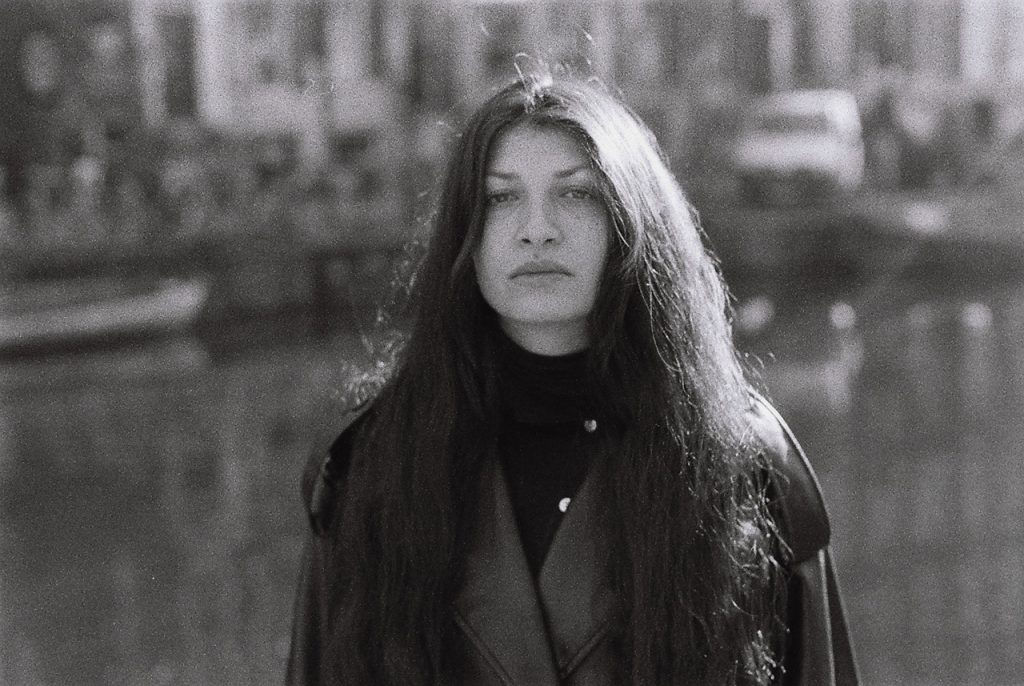
We ask her what her relationship with Bosnia and Herzegovina looks like today.
– I think they respect me, and I hope so. Whoever has a problem with the Roma community – that’s their problem, not mine, not ours as a community – she says.
The discrimination of Roma as second-class citizens has not disappeared. The method of survival therefore remains the same: to accept yourself.
– Who cares if the country accepts me. I accept myself. Every child who grows up as part of a minority very early on knows that feeling of exclusion and must fight for their voice. But from that also comes strength – you get used to rejection, and it makes you more resilient.
She feels, of course, stress around projects and her art, “but it’s the kind of stress I accept, because it comes from being paid for my thoughts and my work, my creativity.”
– Every painting is made with my hands, not a machine, and that makes me proud – she says categorically.
The most important thing for her is to stay connected: in Bosnia she has many friends and would gladly exhibit there. And when she connects her backward glance with her forward look, Selma says she is too young for big conclusions. She is 34 years old and still has much she wants to do, so much to learn.
– I never wanted the life my mother had, so from an early age I directed myself on a different path: as a teenager I painted every day, sometimes ten works a day, and sold them at the market. Later my father became my first manager, and then I was lucky to have professors who saw something in me and helped me grow. All that shaped me and made me the person I am today. Maybe my greatest mission now is simply to keep learning, growing, and allowing life to keep surprising me – concludes Selma Selman.