Written by: Velimir Cindrić
Photos: Le Premier Arhive
…
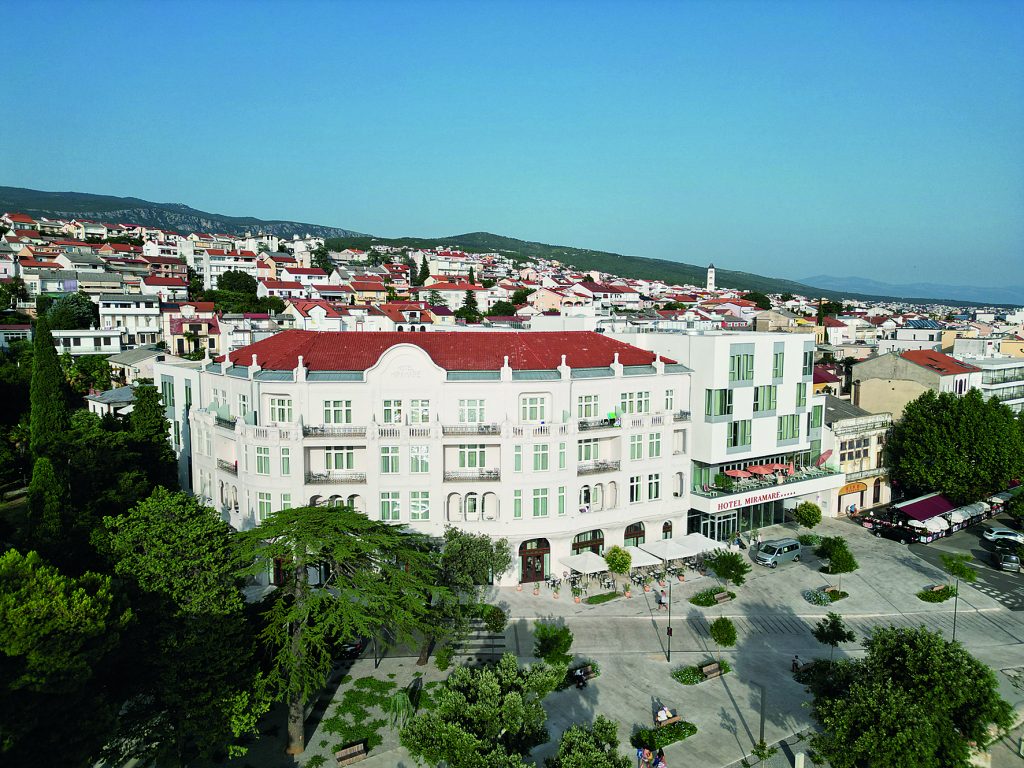
The heritage Hotel Miramare, originally built in 1906 and fully renovated in 2021, is a perfectly luxurious place to relax on the Adriatic coast. It is located right on the seafront, in the centre of the charming town of Crikvenica, just steps away from sandy beaches.
This place, which cherishes a century-old tradition of hospitality, is ideal for complete relaxation. “Feel the pulse of the town with a view of the sea’s blue,” is how the first five-star hotel in this city describes itself—and it’s not an exaggeration!
This beautiful Art Nouveau building (once also home to a hotel of the same name) still draws attention today as one of the most representative examples of coastal tourism and stands proudly alongside the famous beauties of Opatija.
Today’s luxury hotel, enriched with wellness facilities and numerous added amenities, marks a major leap forward for Crikvenica. Interestingly, it also serves as a link between sea and land, as it belongs to the same group as the Le Premier Hotel in Zagreb. That synergy is no coincidence: many guests are looking for just such a combination, so an attractive package was created that connects a visit to the capital with seaside enjoyment.
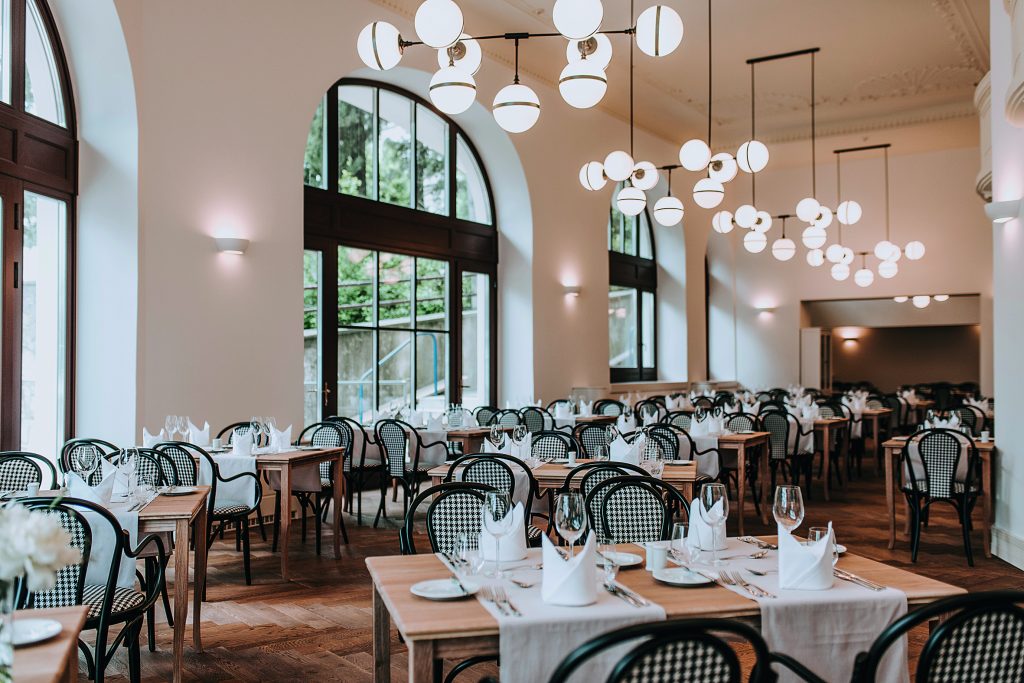
As expected, luxury comes hand in hand with top-tier gastronomy. Among the many advantages of Hotel Miramare is its elegant restaurant with a pleasant and relaxing atmosphere. The menu is dominated by Mediterranean flavours, but guests can also enjoy a wider selection of dishes prepared from carefully selected seasonal and local ingredients, with special attention to every detail.
And since behind every successful concept are the people who make it happen, we met a young but already highly experienced chef who approaches his work with genuine passion and dedication.
“My grandma was a professional restaurant chef, and I grew up with her and my mom’s cooking. Grandma also cooked traditional homemade dishes at home, and I remember them well from my childhood. Watching her work in the kitchen, I learned the basics of cooking—and maybe I even caught the cooking bug without realizing it.”
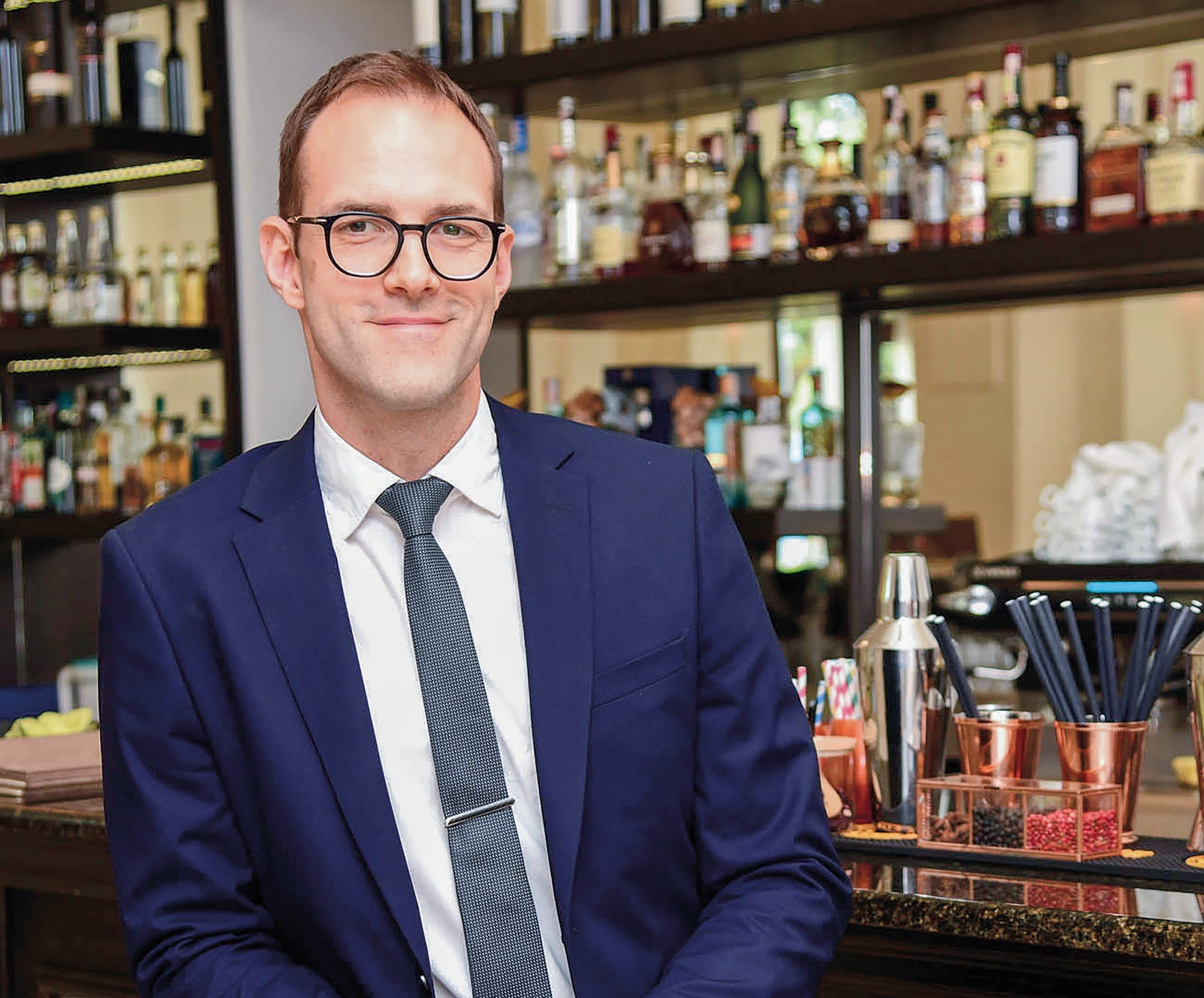
“No, I definitely wasn’t thinking seriously about becoming a chef until I finished elementary school. But when the question of ‘what next?’ came up, I decided to enrol in the Hospitality School in Opatija,” recalls 33-year-old Michele Rajačić, head chef at Miramare.
After finishing school, he worked at several hotels in Opatija. Of course, before that, Michele’s first contact with a professional kitchen was during his school internship. The transition from school lessons and practice sessions to full-time work was far from easy for the fresh-faced young man.
“Well, you know, at first it’s like it is for every beginner chef. You get the worst jobs in the kitchen—washing dishes, peeling potatoes… But over time, you gradually gain some experience, and you try to show as much motivation as possible, so that all the trained and more experienced chefs—those more talented than you—will take the time to teach you. You try to show that you have the will and desire to learn, to learn the things you want to do. So I can’t really say it was that hard, because when you’re young, you can endure a lot. In that sense, it was a kind of normal professional journey,” says Rajačić.
And when the school internship ended, Michele began working seriously—and that’s when the story took a different turn, because with a paid position came responsibility and pressure. Naturally, it was very different from the experience he gained during the previous three years in school and hotel internships.
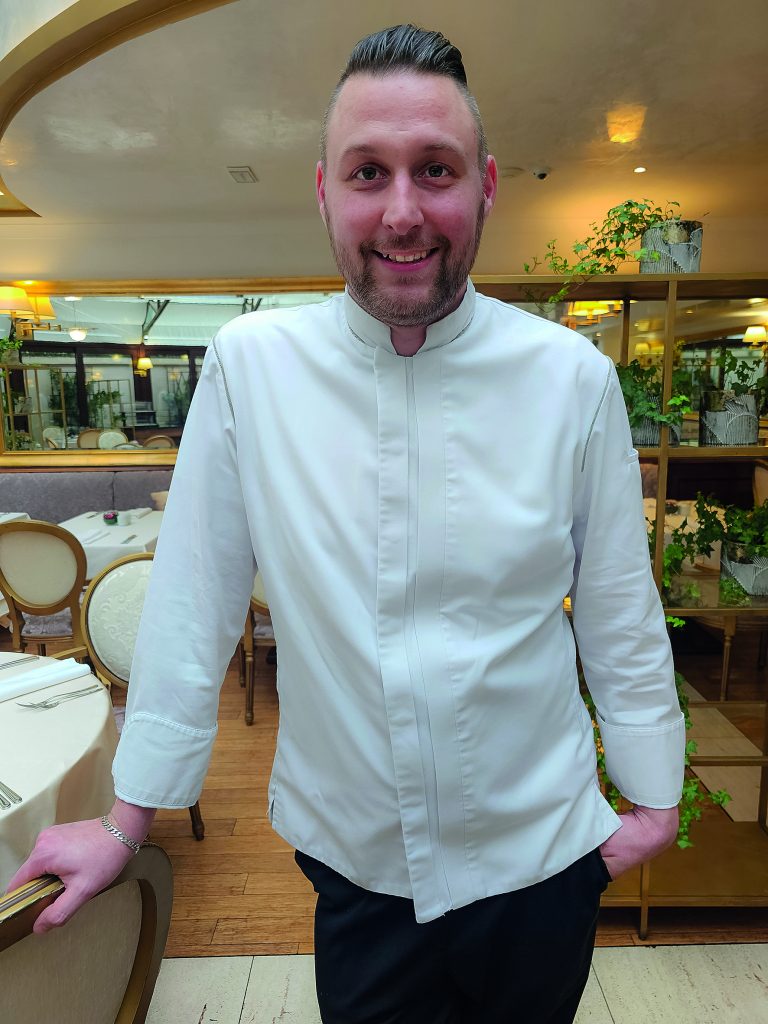
“My first job was at the Milenij Hotel in Opatija, where I had also done part of my internship. Actually, half of my internship was at Hotel Milenij, and the other half was at the restaurant Sveti Jakov, which is also part of the Milenij Hotels group. It was an excellent training ground, because at those two places I learned about responsibility, about respecting the staff, your team, your superiors—and perhaps most importantly, respecting the ingredients and the work itself,” says Rajačić.
At Milenij, Michele worked on pension-style meals and also in the hotel’s gourmet restaurant, while at Sveti Jakov he worked only in the à la carte restaurant. The biggest challenge with pension meals was getting used to the scale. After all, it’s not the same to cook an à la carte dish for two people and to prepare a main meal for 250 guests.
Then, after starting full-time work at Hotel Miramare in Opatija, Rajačić was given an opportunity—after the peak summer season—to take a job at a hotel in an Austrian ski resort.
“That happened completely by chance, unexpectedly. The owner of Hotel Miramare is Austrian and also owns several hotels in Austria. His company had a policy of offering employees the chance to work in Austria during the winter season after the summer ended. That was offered to me too, and I decided to go—mainly to gain new experience. I went with the idea that I’d stay for just one winter season, but I ended up staying much longer,” Michele explains.
The transition from Croatian to Austrian hospitality wasn’t easy, especially since Rajačić didn’t speak German. On top of that, it was difficult to adapt to Austrian cuisine—though it helped that the hotel was a five-star establishment with a strong focus on French cuisine.
“The beginning was really tough, because the work concept was completely different from Miramare. The working habits were different, the language was a barrier, there were a hundred different challenges… Basically, everything I had learned, everything I thought I knew, the fact that I was a ‘trained chef’—suddenly none of it mattered. You quickly realize that, in fact, you know nothing,” he says.

“You know, it feels like you’re starting from zero, as if you’ve just walked into school and stepped into a kitchen for the first time. A real wake-up call. Overall, it was a completely different experience—and my first real contact with fine dining. It’s hard, and you can’t just walk away. The whole time, you ask yourself: Why am I doing this? But despite everything, I liked it all. Everything was new and interesting to me,” says Rajačić.
Season after season, things got easier. After that trial by fire in Austria, Michele returned home. He rose to the position of sous chef and later went back to Austria, where he stayed for four full years as executive chef. Eventually, he landed a position at Hotel Miramare in Crikvenica.
“I stayed in Austria right up until last year, but then I got a bit tired of that way of life—working nonstop, no free time, nothing outside of the job. So I decided it was time to come home—to be in my own country, speak my language, be surrounded by friends, family, people I know… Then last year, at the encouragement of a dear friend from high school, I applied for a position at the only five-star hotel in Crikvenica. And that’s how the whole story began,” Michele explains.
That’s how he came to Crikvenica and started working as a chef on the team led by Ivan Vrbanc. But after the season ended, Ivan decided not to return, so the hotel’s management had to find a replacement. They reviewed the résumés of the kitchen staff and saw Michele as a potential candidate, offering him the position of head chef. After a few days of consideration, he accepted the offer and became responsible for both the gourmet restaurant and the pension-style dining.
“Honestly, the job is very demanding because we have a large number of guests; the food offering is huge, both in quantity and preparation. There are lots of orders, lots of suppliers, and many other moving parts… In short, by the time everything comes together into the final product that the guest expects, it’s a very complex process. Also, I wanted to make some changes in the kitchen’s organization because, of course, everyone works in their own way. Some changes have been made, and others will come with time, but we’ll get there,” says Rajačić.
In terms of culinary style, Michele says he loves traditional cuisine the most, but he always adds his personal touch—something modern or currently trending. He leans more toward a rustic style of cooking, but when fine dining is called for, especially for special events, he enjoys that challenge too. He values creativity and has developed several signature dishes, but he emphasizes that what matters most is doing things properly, following his protocols, and always giving his best.
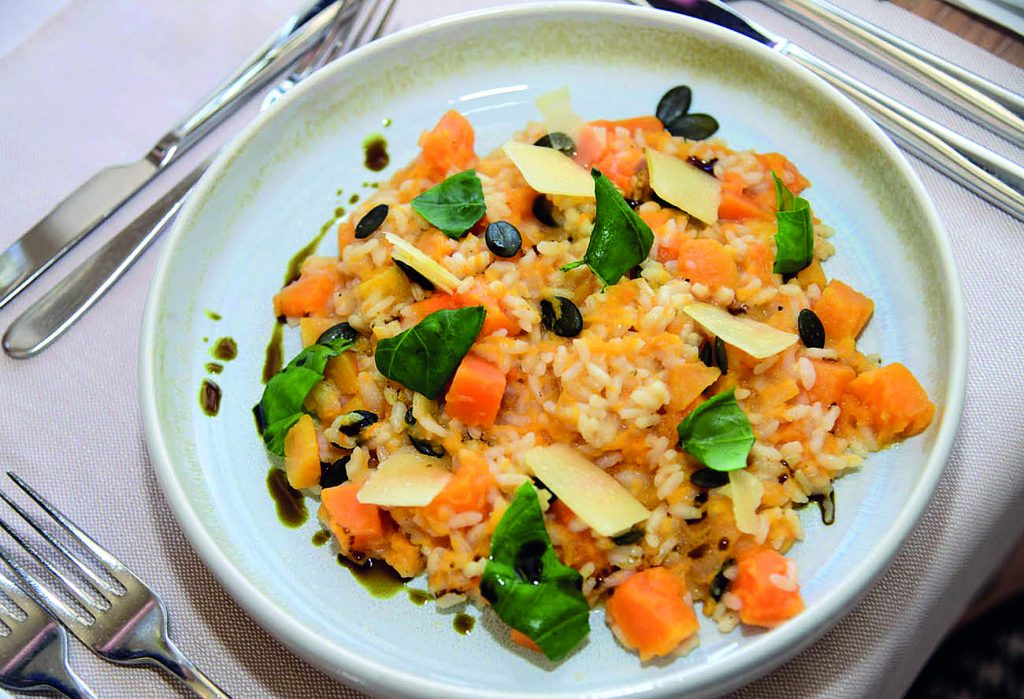
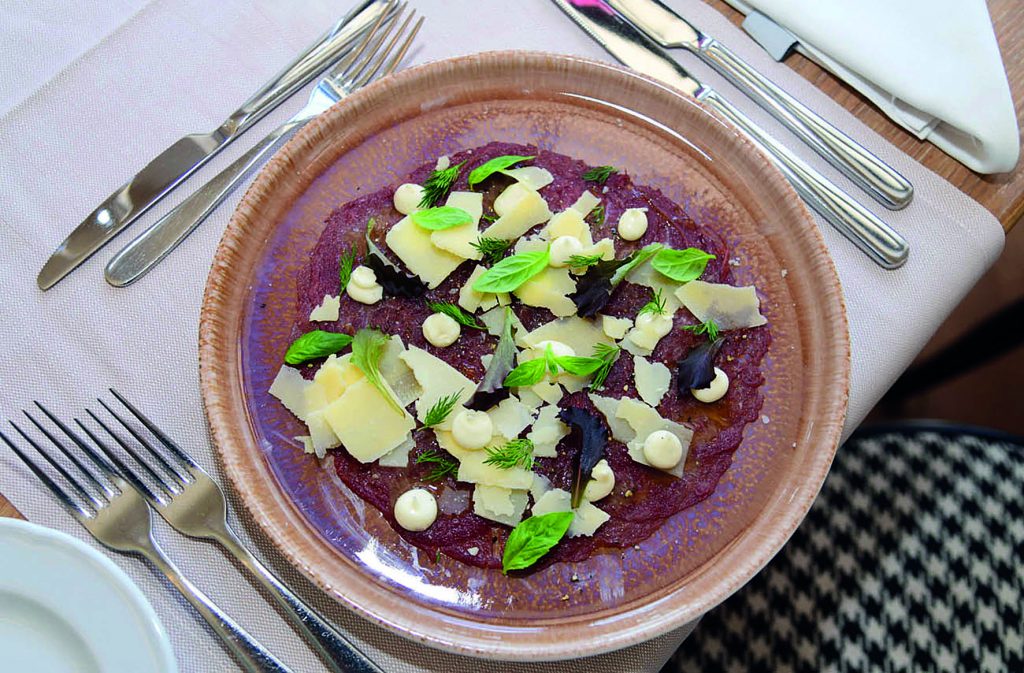
“It’s also important to me that I have full freedom here, and that no one interferes with my work. Just as important is the chance to constantly grow and develop, because the kitchen is a very unique space—there’s no end to it. It’s a story that’s always evolving, and any ambitious professional has to keep up and work on their development. For example, when I compare what I was doing five years ago to what I’m doing now, the difference is huge—and it shows me that I’m on the right track. When it comes to ingredients, my philosophy is to source the best I can and get the most out of them—flavour-wise, aroma-wise, and visually too,” he says.
The gourmet restaurant menu at Miramare is, as Michele puts it, “short, clear, and effective.” That means it’s not overly long, but still covers everything guests might want. There are two cold starters, four hot starters, two soups, three main courses, and five desserts. In addition, there are two more main courses with blue fish, as the restaurant specializes in this traditional ingredient—so altogether, you could say there are five main dishes on offer.
Finally, we ask Michele about his plans for the future.
“My plans aren’t set in stone. I’m here at Miramare, and I’m fully focused on that. I want to build something long-term, do things the right way, and give my absolute best. Also, the Kvarner region was recently named the European Region of Gastronomy for 2026, and we’re all really proud of that. It’s also an extra source of inspiration for me to give my all.
And who knows what the future will bring… My own restaurant? That’s something far off for now—maybe, maybe not. If it happens, I’d love it to be a small, intimate place, with no more than 20 seats and a seasonal menu. And ideally somewhere nearby—not far from Rijeka, where I’m from. I’ve come home, and my plan is to stay—by the sea, and close to home,” concludes the head chef of Miramare.